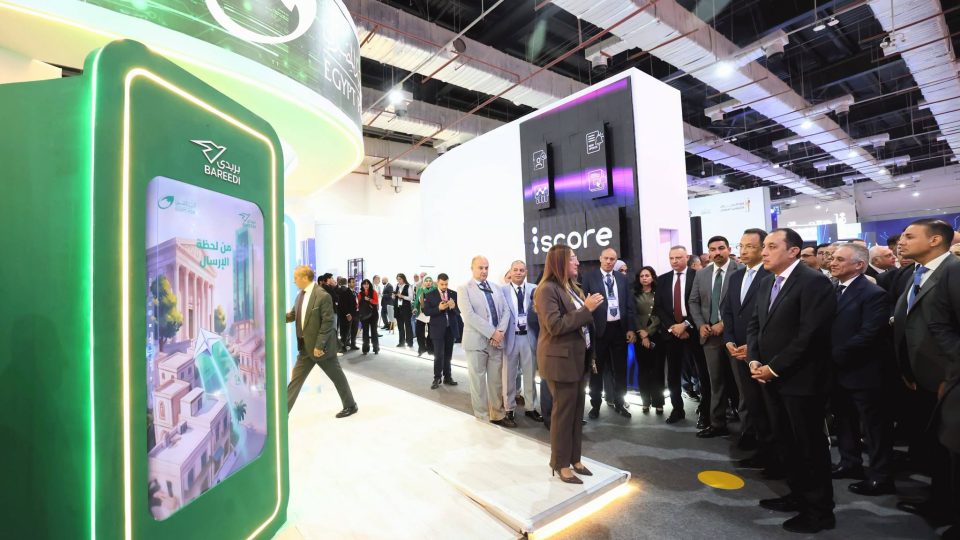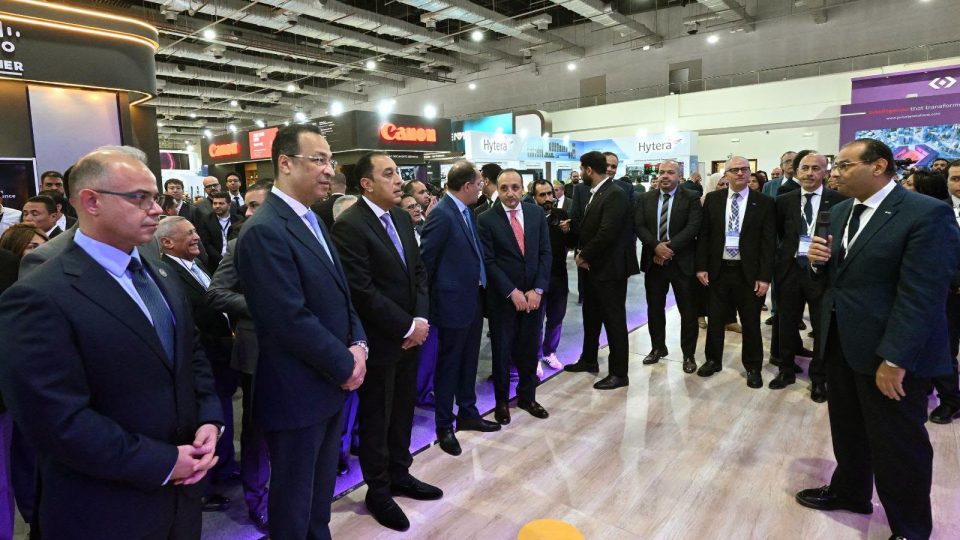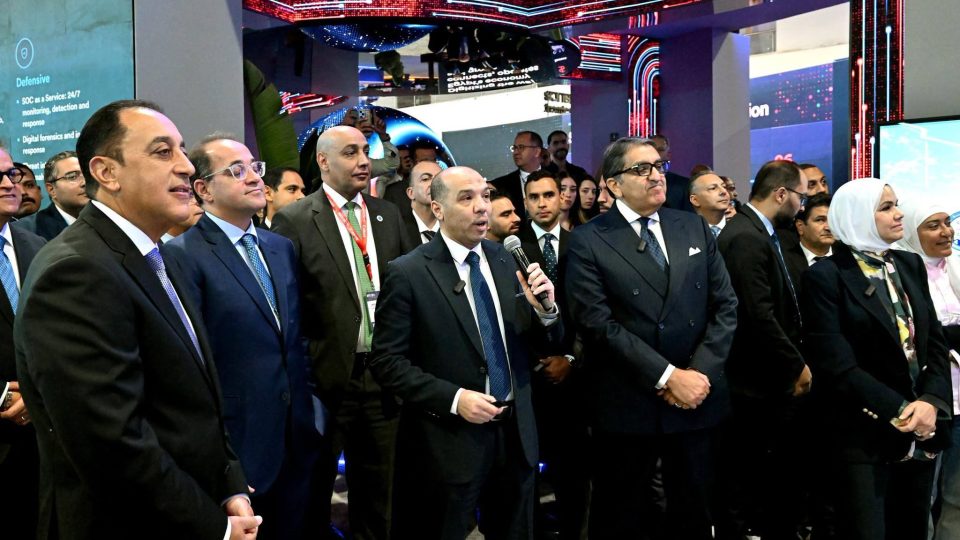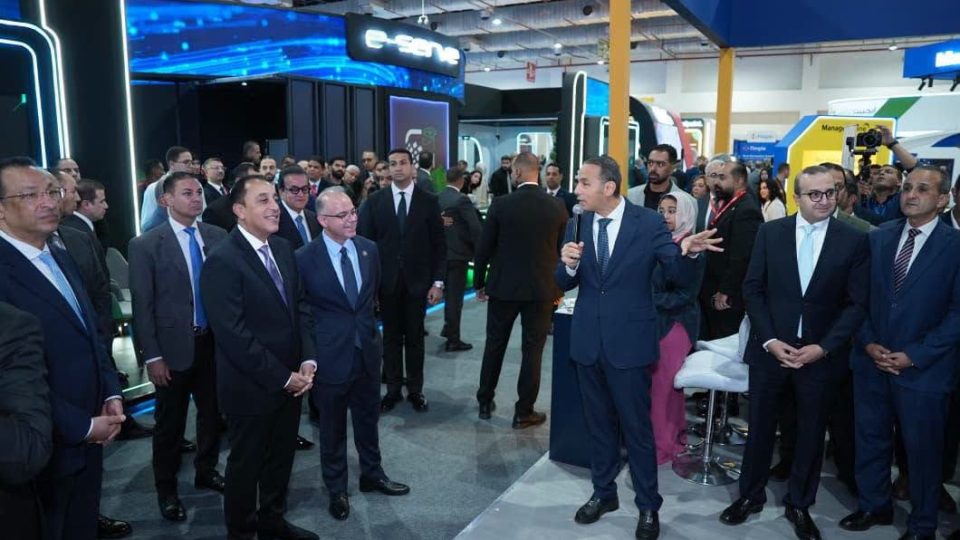

Investment Minister Mohamed Farid outlines plans to digitize investor and exporter services, launch a Trade Sandbox regulatory framework, and develop an integrated investment package to attract data centers.
Egypt is stepping up efforts to leverage artificial intelligence (AI) and digital transformation to modernize government services, improve foreign trade efficiency, streamline procedures for investors and exporters, and attract technology investments, particularly in the data center sector.
Investment and Foreign Trade Minister Mohamed Farid made the remarks during a ministerial session held as part of the Cairo International Technology Exhibition and Conference (Cairo ICT), alongside the ministers of Finance, Communications and Information Technology, and Water Resources and Irrigation.
During the session, Farid highlighted the ministry’s efforts to implement the recommendations of Egypt Forum 2026, particularly those related to completing the digital transformation of government services provided to citizens and investors.
He explained that the ministry’s digitalization strategy focuses on several key areas, including digitizing services for investors and exporters, enhancing trade monitoring and commercial data analysis, and creating an enabling environment for innovation and technology-driven solutions to strengthen the competitiveness of Egyptian exports.
Digitizing investor and exporter services
Farid said the digital transformation plan covers the ministry’s services and those of its affiliated entities, foremost among them the General Authority for Investment and Free Zones (GAFI), the General Organization for Export and Import Control (GOEIC), and the Export Development Fund.
The initiative aims to enable investors and exporters to complete procedures electronically without having to travel between governorates to submit documents, thereby reducing administrative burdens and improving the efficiency of government services.
The plan also includes developing an integrated digital system for export-related services, covering participation in international exhibitions and services provided by the Export Development Fund. This will allow companies to complete procedures online and access services more easily.
The minister noted that electronic customer identification and identity verification tools, including passport-based verification and other digital methods, offer opportunities to further modernize government services and integrate AI into application analysis and operational processes.
He added that the ministry is also working to digitize its complaints management system to identify challenges facing investors, analyze recurring issues, and develop appropriate measures to address them.
AI to strengthen trade monitoring and policy-making
Farid revealed that the ministry is coordinating with the Ministry of Finance to modernize oversight of free zones through digital technologies and artificial intelligence.
The initiative will focus on improving the monitoring of goods and movement through entry and exit points, while strengthening oversight of commercial activities.
He also highlighted the role of AI in analyzing import and foreign trade data, explaining that these technologies can strengthen Egypt’s trade remedies framework by identifying changes in trade flows and analyzing relevant indicators.
Such capabilities, he noted, will support more effective decision-making and contribute to the development of evidence-based trade policies.
Trade Sandbox to support exporters and technology startups
The minister announced that the ministry is working to launch a regulatory sandbox for foreign trade technology, known as the Trade Sandbox, designed to enable companies and entrepreneurs to develop innovative technology solutions, particularly AI-powered applications that support exporters and enhance the competitiveness of Egyptian products in international markets.
The initiative will seek to leverage databases held by GOEIC and the Export Development Fund, in accordance with applicable regulatory requirements, and make relevant data available to specialized companies to develop innovative applications.
These solutions are expected to help exporters identify new export opportunities, access international markets, and connect Egyptian products with targeted markets.
Farid stressed the importance of broadening Egypt’s exporter base, noting that approximately 43% of the country’s exports between 2021 and 2026 were concentrated among just 50 companies.
This concentration, he explained, highlights the need to increase the number of exporting businesses and provide small and medium-sized enterprises (SMEs) with technological tools that enable them to enter international markets and strengthen their competitiveness.
Integrated investment framework to attract data centers
Addressing investment opportunities in the data center industry, Farid emphasized that attracting investments in this sector requires a comprehensive approach, given its complex infrastructure requirements, including advanced technology equipment, cooling systems, energy infrastructure, and reliable electricity supplies.
He explained that the Ministry of Investment and Foreign Trade is coordinating with the ministries of Communications and Information Technology and Electricity and Renewable Energy to develop an integrated investment package.
The package will include identifying suitable land, securing the necessary preliminary approvals and licenses, accelerating project implementation, and reducing the number of procedures and government entities investors need to deal with.
Farid noted that data centers serve a substantial share of their customers in international markets, making flexible regulatory and investment frameworks essential to attracting projects and supporting their operations.
These frameworks could include the possibility of benefiting from Egypt’s free zone system, alongside completing the licensing requirements related to telecommunications, energy, and infrastructure.
He also pointed out that Egypt’s Investment Law provides a legal framework for issuing licenses and advance approvals for investment projects, helping simplify procedures and shorten the time required to commence operations.
Coordinated government efforts to strengthen Egypt’s digital economy
Concluding his remarks, Farid underscored the importance of coordination among the relevant ministries and leveraging the Ministry of Communications and Information Technology’s National Artificial Intelligence Strategy to align national efforts.
He stressed that integrating digital technologies and AI into government services, foreign trade, and investment processes will play a key role in strengthening the competitiveness of the Egyptian economy, expanding export opportunities, and attracting further investment in advanced technology industries.