November 10, 2026: Egypt’s hospitality sector continues to attract strong investor confidence, with industry stakeholders increasingly shifting their focus from tourism demand prospects to investment execution, financing accessibility and infrastructure development, according to the latest findings of the Egypt Hospitality Investment & Market Sentiment Survey 2026 released by HVS Middle East & Africa.
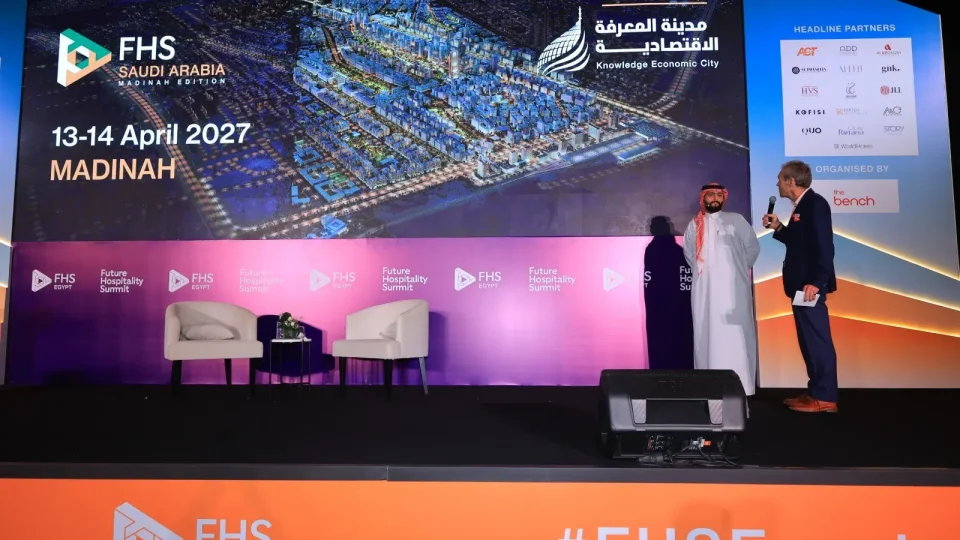
The survey findings were unveiled during the Future Hospitality Summit (FHS) Egypt in Cairo, highlighting the sector’s positive investment outlook and identifying the key factors expected to shape its next phase of growth.
Conducted among hospitality investors, developers, hotel owners, lenders and other industry stakeholders active in Egypt, the survey found that 97% of respondents have a positive outlook on hospitality investment opportunities in the country over the next three to five years.
A particularly significant finding is that none of the respondents identified uncertainty surrounding tourism demand as the sector’s primary investment constraint. This reflects growing confidence in Egypt’s tourism fundamentals, with attention increasingly turning towards the industry’s ability to translate market potential into tangible investments and successfully deliver development projects.
GCC Investors Expected to Drive Hospitality Investment
The survey revealed that four out of five respondents believe Egypt’s hotel development pipeline can be absorbed without creating significant oversupply concerns.
Gulf investors are expected to play a leading role in the next investment cycle, with 45% of respondents identifying GCC investors as the primary source of hospitality investment capital over the next five years, compared with 19% who expect Egyptian private investors to lead.
Despite the positive outlook, access to financing and foreign exchange exposure remain major challenges. Foreign exchange risk was identified as the leading individual investment constraint by 32% of respondents, while financing and capital-related challenges accounted for 55% of responses.
North Coast Emerges as Egypt’s Most Attractive Investment Destination
The North Coast narrowly ranked as the most attractive hospitality investment destination, attracting 39% of respondents, ahead of Greater Cairo and Giza at 35%, and the Red Sea mainland at 16%.
The survey also highlighted the growing investment appeal of Egypt’s coastal destinations, with 82% of participants saying that recent large-scale investment commitments have strengthened their confidence in the North Coast. However, seasonality remains a major challenge, with 75% identifying it as the primary obstacle to developing year-round tourism demand.
In terms of future tourism demand, Red Sea and coastal leisure destinations are expected to lead growth, cited by 75% of respondents, followed by cultural and heritage tourism at 64%.
Despite these positive expectations, only 3% identified Luxor, Aswan and the Nile corridor as the most compelling destinations for investment, highlighting a gap between the anticipated growth in cultural tourism demand and current investor interest.
Air Connectivity and Infrastructure Remain Critical Priorities
Air connectivity and airport infrastructure emerged as essential factors in supporting Egypt’s tourism ambitions. The survey found that 54% of respondents consider the country’s current aviation capacity and international connectivity inadequate to support future growth.
Nevertheless, 79% believe Egypt is likely to achieve approximately 30 million international visitors by 2030, underscoring the industry’s confidence in the country’s long-term tourism potential.
When asked about the policy measures needed to accelerate investment, respondents highlighted tax and investment incentives as the leading priority, cited by 43%, followed by airport and transport infrastructure improvements at 39%, and faster licensing and approval procedures at 36%.
HVS: Egypt’s Hospitality Sector Reaches an Important Turning Point
Commenting on the findings, Hala Matar Choufany, President of HVS Middle East & Africa, said:
“Egypt’s hospitality sector has reached an important inflection point. What stands out from the survey is that investors are no longer questioning demand fundamentals. The conversation has shifted to capital deployment, air connectivity, workforce development and execution. Egypt’s tourism story is increasingly understood and accepted. The next phase will be determined by how effectively confidence is converted into investment.”
The survey findings indicate that while confidence in Egypt’s hospitality market remains exceptionally strong, the sector’s future performance will increasingly depend on its ability to address structural challenges related to connectivity, infrastructure, financing and project execution.
The growing prominence of the North Coast also reflects a shift in investment priorities, positioning the destination alongside established tourism and business gateways such as Cairo and Giza. Meanwhile, cultural and heritage destinations represent an important opportunity to diversify Egypt’s tourism offering and attract further investment.
As Egypt moves towards its long-term tourism targets, the survey underscores the hospitality industry’s confidence in the country’s ability to sustain growth, attract international capital and reinforce its position as one of the Middle East and Africa’s leading hospitality investment markets.