Egypt is pursuing a comprehensive industrial strategy aimed at expanding exports, attracting investment and strengthening domestic manufacturing, with a particular focus on integrating Egyptian products into regional and global value chains, Minister of Industry Khaled Hashem said.
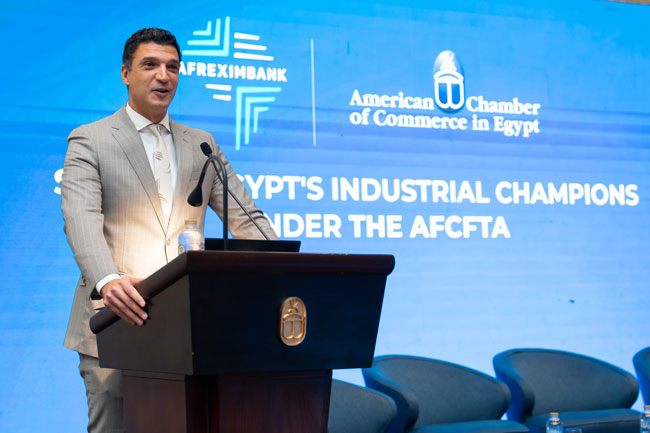
Speaking at a conference organized by the African Export-Import Bank (Afreximbank) and the American Chamber of Commerce in Egypt, Hashem said the strategy would prioritize private-sector investment, technology transfer and higher-value manufacturing, while strengthening links between small and medium-sized enterprises (SMEs) and major manufacturers.
He emphasized that increasing local content, developing competitive production systems and investing in technology and workforce skills were essential to improving the competitiveness of Egyptian products in African and international markets.
The conference brought together industry and trade stakeholders to explore opportunities to expand Egyptian and African exports, capitalize on changes in global supply chains, increase intra-African trade and deepen industrial integration across the continent.
Global Supply Chain Shifts Create New Investment Opportunities
Mohamed Qassem, chairman of the Egyptian Exporters Association (Expolink), said ongoing changes in global supply chains were creating new opportunities for Egypt and other African economies to attract industrial investment, advanced technologies and manufacturing activities.
He noted that successive economic disruptions, including the 2008 global financial crisis and the COVID-19 pandemic, had accelerated the restructuring of international production networks as companies reassessed manufacturing locations and sought to move closer to key consumer markets.
These developments could strengthen Egypt’s position as a regional manufacturing and export hub, provided the country continues to improve its investment climate, production capabilities and access to international markets.
Godfrey Walakira, a senior trade expert at the African Continental Free Trade Area (AfCFTA) Secretariat, said 26 member states had expressed interest in conducting trade under the agreement, out of 50 countries that had ratified it.
He added that rules of origin had been agreed for 93.7% of tariff lines, creating a framework for eligible products to benefit from preferential trading arrangements among participating countries.
Walakira highlighted Egypt’s potential to expand exports to West, East and Southern Africa, while stressing that stronger infrastructure and improved cross-border connectivity were necessary to facilitate trade, reduce logistical costs and overcome barriers to market access.
He identified pharmaceuticals and fertilizers as promising sectors for developing integrated African value chains. Greater cooperation in these industries could strengthen medicine and food security across the continent while reducing dependence on imports from outside Africa.
Egypt-Africa Trade Reaches $9 Billion
Saad Sabra, head of the International Finance Corporation’s (IFC) Egypt office, said trade between Egypt and other African countries had reached approximately $9 billion, with Egyptian exports accounting for 83% of the total and imports representing the remaining 17%.
He called for greater sourcing of production inputs that are unavailable domestically from African markets, enabling Egyptian manufacturers to incorporate these materials into local production, increase domestic value added and enhance the export potential of finished goods.
Sabra also underscored the importance of improving the business and regulatory environment to attract investment and support industrial expansion.
He highlighted the role of private-sector financing, including concessional funding, blended finance and risk-mitigation mechanisms, in mobilizing capital for industrial and trade projects with strong growth potential, particularly those involving SMEs.
Building Integrated African Manufacturing and Export Networks
The discussions underscored the need for African economies to move beyond increasing bilateral trade volumes towards developing interconnected production systems, manufacturing networks and export supply chains.
Achieving this objective will require sustained investment in infrastructure, stronger private-sector participation, improved access to finance and deeper regional economic cooperation.
For Egypt, expanding industrial exports across Africa offers an opportunity to diversify export markets, attract new manufacturing investment and strengthen the role of domestic producers in regional value chains.
The success of this approach will depend on the country’s ability to enhance industrial competitiveness, increase local production capacity and build stronger commercial partnerships with African markets under the AfCFTA framework.