Egypt is working with the World Bank and other international financial institutions to develop a new financing mechanism for infrastructure projects, seeking to attract additional investment, mitigate financial risks and reduce pressure on public finances, Planning Minister Ahmed Rostom said on Wednesday.
The proposed mechanism will rely on financial guarantees to help bridge development financing gaps, expand access to concessional funding and mobilize private-sector capital for strategic infrastructure projects.
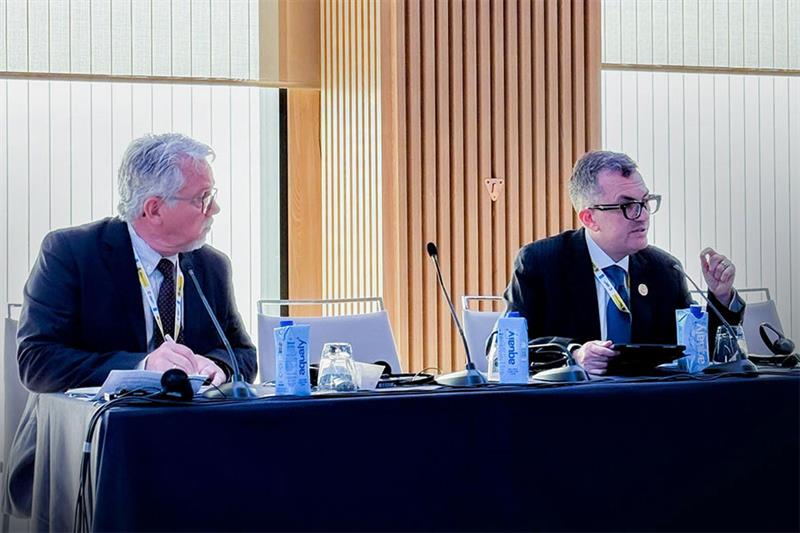
Rostom outlined the initiative during the 2026 Sustainable Development Goals Financing Dialogue in Madrid, where he participated in the opening session on country-led development financing through integrated national financing frameworks. The session brought together representatives of national development finance institutions from Spain, Brazil, Mexico and the Dominican Republic.
Held from 27 to 29 October, the dialogue is organized in partnership with the United Nations Development Programme (UNDP) and the Spanish government.
Guarantees and Blended Finance to Attract Investment
Rostom said Egypt is developing financing instruments designed to direct available resources toward national development priorities while improving efficiency, containing investment risks and safeguarding public finances and debt sustainability.
The proposed infrastructure guarantee framework is being prepared in cooperation with the World Bank and other international institutions. It is intended to reduce the risks associated with infrastructure investment and encourage greater participation by private investors.
The minister called on international financial institutions and development partners to expand concessional financing and make greater use of guarantees and blended-finance instruments to unlock additional funding for development projects.
He also emphasized the importance of national development finance institutions in supporting strategic investments, pointing to the restructuring of the National Investment Bank (NIB) as part of broader efforts to improve institutional efficiency, mobilize financial resources, maximize asset returns and strengthen partnerships with the private sector.
Green Investments Account for 55% of Public Investment Plan
Egypt is also seeking to expand sustainable financing and direct more public investment toward environmentally friendly projects.
According to Rostom, the public investment plan for fiscal year 2025/2026 allocates EGP 637 billion to green investments, representing 55% of total planned public investment.
He highlighted Egypt’s issuance of $750 million in sovereign green bonds in 2020 as an important step in developing sustainable financing instruments. The government is also working to expand blended-finance arrangements that combine funding from different sources to support development initiatives, particularly those with environmental benefits.
These efforts form part of Egypt’s broader approach to diversifying funding sources and mobilizing capital for projects that support sustainable economic growth.
National Financing Strategy Targets Development Gaps
Egypt’s Integrated National Financing Strategy, developed in partnership with the UNDP and supported by the Joint SDG Fund, is aligned with Egypt Vision 2030, the Addis Ababa Action Agenda and the Sevilla Commitment.
Rostom said the strategy establishes a framework for mobilizing sustainable financing from domestic and international public and private sources, while directing resources toward the country’s development priorities.
He also highlighted the National Economic Transformation Programme, which sets priorities for the coming period and supports the transition toward medium-term planning aligned with the government’s medium-term budget framework.
As part of its efforts to improve the allocation of development resources, Egypt has introduced digital tools, including a governorate-level Sustainable Development Goals data platform, to identify regional development gaps and assess local priorities.
Smart budget-management tools were also used to connect development progress with financing decisions during the preparation of Egypt’s 2026 Voluntary National Review, according to the minister.
Egypt Calls for Stronger International Development Financing
Rostom stressed the need for stronger international coordination under the Sevilla Commitment and the Sevilla Platform for Action to improve developing countries’ access to concessional financing and mobilize the resources required to achieve their development objectives.
For Egypt, the proposed infrastructure guarantee mechanism represents an effort to broaden financing options beyond traditional public borrowing, while encouraging private investment in projects that support economic development.
Its effectiveness will depend on the availability of affordable funding, the allocation of risks between public and private partners, and the ability to attract investors without undermining fiscal sustainability.
The initiative reflects Egypt’s wider strategy to diversify development financing, improve investment efficiency and strengthen cooperation with international financial institutions as the country seeks to meet its infrastructure and sustainable development needs.