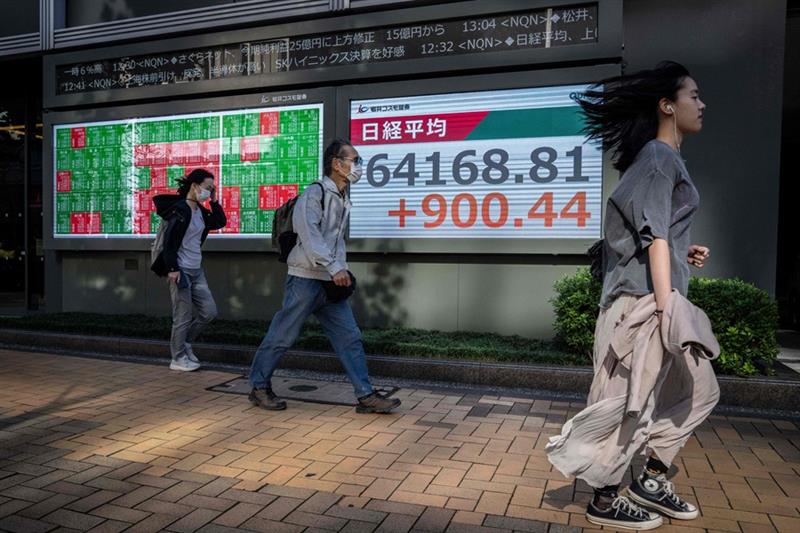
Asian technology stocks rallied on Wednesday after stronger-than-expected results from South Korean chipmaker SK Hynix reinforced confidence in the artificial intelligence sector, ahead of earnings reports from US technology giants Microsoft and Alphabet. Oil prices also climbed as investors assessed Israel’s election results and their potential implications for Prime Minister Benjamin Netanyahu’s government and the conflict with Iran.
After facing renewed pressure earlier this month over mounting AI investment costs, questions about profitability and concerns about corporate finances, technology shares regained momentum as investors focused on the sector’s revenue growth and long-term prospects.
SK Hynix, a major beneficiary of surging demand for advanced semiconductors used in AI infrastructure, reported a 632% increase in third-quarter operating profit to US$62.8 billion. The company said it had recorded consecutive quarterly records for both revenue and operating profit for six straight quarters.
“While Wall Street argues over whether the AI arms race can keep financing itself, SK Hynix has just reminded the market that somebody on the other side of all that capex is receiving the cheque,” Stephen Innes of SPI Asset Management wrote.
Investor sentiment also received a boost from Anthropic, the developer of Claude AI, which disclosed in its initial public offering filing on Monday that first-half revenue had surged approximately 1,300%. The company also outlined plans for substantial capital expenditure as it prepares to expand its AI infrastructure.
On Tuesday, Broadcom, alongside Citi, Blackstone and Morgan Stanley, announced a US$63 billion financing arrangement to support the development of additional computing capacity for Anthropic.
Chris Weston of Pepperstone said Anthropic’s filing had strengthened the AI investment narrative, highlighting its exceptional revenue growth, improving computing economics and significant commitments to future infrastructure spending.
Asian markets advance
SK Hynix shares surged nearly 11% on Wednesday, while rival Samsung Electronics gained 9% ahead of its earnings announcement scheduled for Thursday. The rally lifted South Korea’s Kospi index by more than 6%.
Japan’s Nikkei 225 rose more than 1%, supported by strong gains among semiconductor-related companies. Kioxia climbed 13.8%, while Advantest advanced more than 3% and Tokyo Electron gained 4.4%.
Taiwan’s market also moved sharply higher, supported by strong performance from chipmaker TSMC. Hong Kong, Shanghai, Singapore and Wellington recorded gains, while Sydney traded broadly flat and markets in Manila and Bangkok edged lower.
In India, the Mumbai market declined despite a sharp debut rally in Jio Platforms, the digital arm of Reliance Industries. The company’s shares jumped more than 20% following an initial public offering that raised a record US$3 billion in India.
The gains across Asia followed an advance on Wall Street, where the Nasdaq Composite rose more than 1%.
Investors await major earnings and Fed decision
Market attention is now turning to earnings from Microsoft and Alphabet, both scheduled to report later on Wednesday. Amazon, Apple and Intel are due to release their results on Thursday.
Investors are also awaiting the US Federal Reserve’s monetary policy decision. The central bank is widely expected to leave interest rates unchanged following last month’s increase, but its policy statement and comments from Chair Kevin Warsh will be closely examined for signals about the future direction of monetary policy.
Markets are currently pricing in the possibility of another rate hike in December, making the Fed’s assessment of inflation and economic conditions particularly important for technology stocks and other risk-sensitive assets.
Oil prices rise amid Israeli election uncertainty
Crude oil prices gained more than 2% as preliminary results from Israel’s general election emerged, with the political outcome potentially shaping the country’s future approach to the conflict with Iran.
Opinion polls had suggested a close contest between Netanyahu’s ruling Likud party and the opposition. Netanyahu pledged to form a new governing coalition and indicated that he could work with US President Donald Trump to address what he described as the “existential threat” posed by Iran.
Opposition candidate Gadi Eisenkot, meanwhile, said voters had chosen change and indicated that he would seek to form a new administration.
The political uncertainty added another factor for energy investors to monitor, as developments in Israel and the wider Middle East could influence regional security risks and expectations for global oil supply.