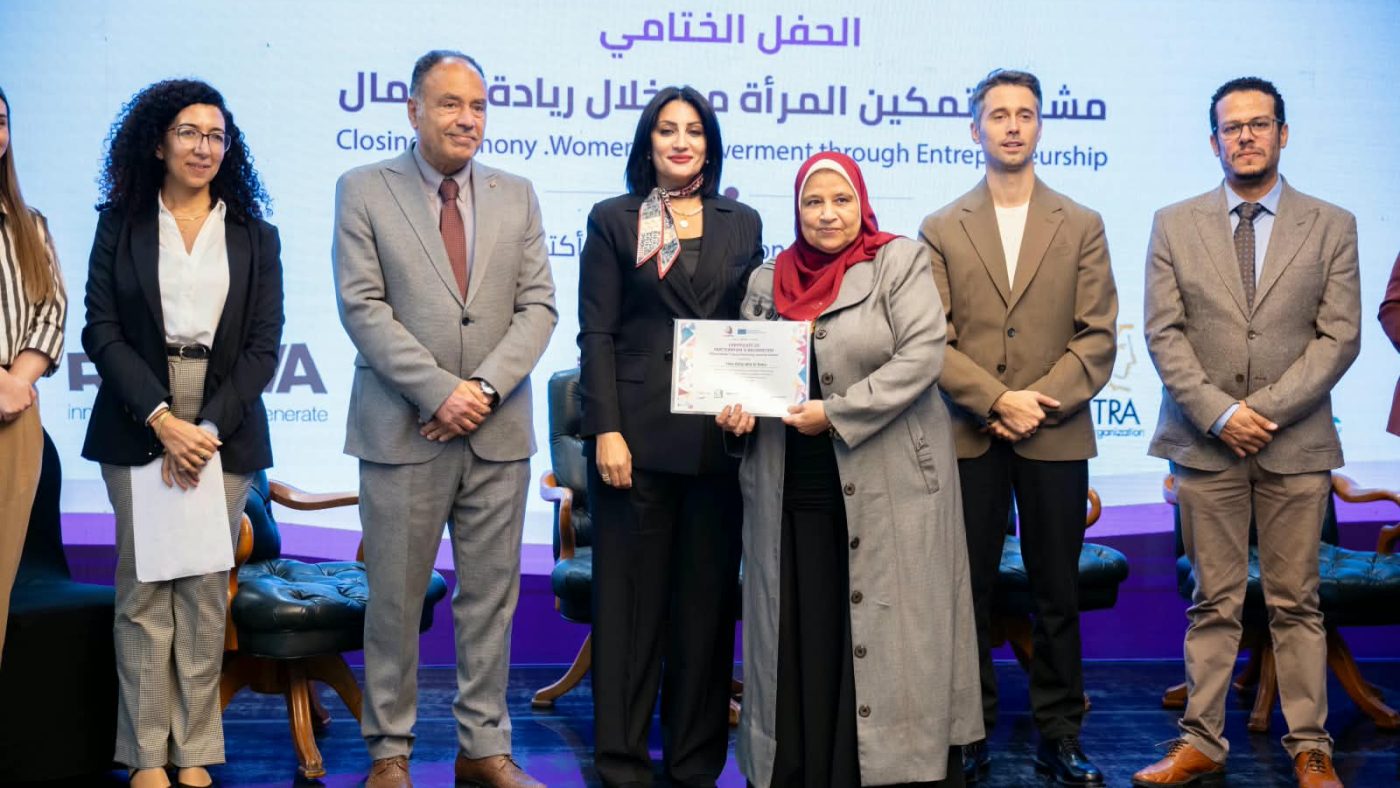
Misr El Kheir Foundation has concluded the three-year WEntre project, an initiative designed to empower women through entrepreneurship, strengthen their economic independence, and support sustainable development in local communities. The closing ceremony brought together representatives of European and local partners, trainers, and experts to review the project’s achievements and explore opportunities to build on its outcomes.
Funded by the European Union, WEntre brought together six partners: Misr El Kheir Foundation, the Center of Educational Excellence at Ain Shams University, and Green Line Consulting from Egypt, alongside Folkuniversitetet from Sweden, Dimitra Education & Consulting from Greece, and Renova Foundation from Spain.
The closing event highlighted the project’s main results over its three-year implementation period, including specialized training curricula, a shared competency framework, research findings, and a digital platform designed to make its resources accessible to trainers and organizations working in entrepreneurship education.
Five Specialized Curricula Address Women Entrepreneurs’ Needs
Dr. Ghada Diab, Head of the Education Sector at Misr El Kheir Foundation, said the project marked an important milestone in translating accumulated knowledge and expertise into practical, sustainable outcomes for women and their communities.
She explained that WEntre was developed around the foundation’s commitment to designing development initiatives that respond to beneficiaries’ actual needs. Launched in 2024, the project began with listening and consultation sessions involving women entrepreneurs and members of local communities to identify the challenges affecting business growth and sustainability.
The consultations and training activities highlighted several barriers, including limited access to markets, intense price competition, high fees for participating in exhibitions, the need for specialized training, and family caregiving responsibilities. These findings informed the development of the WEntre methodology, with an emphasis on practical solutions adapted to local circumstances.
The partnership produced national research, a common competency framework, and five specialized training curricula covering:
- Building Learner-Centered Learning Environments
- Business Mentoring
- Fostering an Entrepreneurial Mindset
- Co-Designing Blended Learning Environments
- Building Communities of Practice
The project also developed the WEntre Guide and Self-Assessment Tool, making these resources available through an open digital platform in Arabic and four European languages. The platform is intended to help trainers and relevant organizations access the project’s methodologies, tools, and accumulated expertise.
Digital Platform Connects Trainers and Entrepreneurship Experts
Dimitris, representing Dimitra Education & Consulting in Greece, said the project’s workshops and training programs focused on identifying challenges and developing tailored solutions for Egyptian women entrepreneurs across different sectors.
He noted that WEntre worked to prepare qualified trainers, conduct comprehensive evaluations, and establish performance-based training tasks. The project’s core outcomes also include building an interactive community where participants can exchange experiences and perspectives, alongside an integrated digital platform that houses training tools and guidance materials for continued use.
The multilingual platform is designed to extend the project’s reach beyond its implementation period, allowing trainers and organizations to draw on its resources to support entrepreneurship education and professional development.
Ain Shams University Highlights Entrepreneurship Education
Dr. Safaa Shehata, Dean of the Faculty of Education at Ain Shams University, emphasized the importance of partnerships between academic institutions and civil society organizations in advancing women’s empowerment and leadership.
She noted that entrepreneurship has become an essential competency for modern graduates. Through the university’s Business Guidance and Counseling Unit, the team developed a curriculum designed to transform trainers from traditional lecturers into business mentors capable of guiding entrepreneurs through practical challenges.
According to Dr. Shehata, the project demonstrated the value of goal-oriented training grounded in practical experience. She added that the next phase would build on these results through further training programs involving the university’s Center of Excellence and by encouraging postgraduate students to develop research based on the project’s outcomes.
WEntre Trains 45 Female Trainers to Support Women-Led Businesses
Dr. Ehab Shawky, Executive Director of Green Line, said the initiative emerged from an assessment of local community needs and the role of entrepreneurship in supporting economic growth. The assessment identified a lack of coordination among training providers and a gap between training outcomes and the requirements of the labor market.
He explained that the project followed a three-stage implementation model: identifying challenges, training trainers and transferring knowledge, and selecting women to participate in the training programs. To date, 45 female trainers have been qualified through collaboration between Green Line, Misr El Kheir Foundation, and Ain Shams University.
Dr. Randa El-Shehabi of Green Line also outlined the project’s framework, which operates across three interconnected levels to strengthen women’s entrepreneurial capabilities.
The first level focuses on senior trainers, emphasizing continuous improvement, strategic knowledge transfer, and leadership in training environments. The second develops trainers’ instructional design skills through Project-Based Learning (PBL), the creation of flexible specialized curricula, and effective use of the WEntre digital platform.
The third level targets women entrepreneurs by providing a supportive environment for experimentation, addressing marginalization, developing an entrepreneurial mindset, and helping women establish sustainable businesses.
Through its combination of research, specialized curricula, trainer development, and digital resources, WEntre seeks to strengthen the ecosystem supporting women entrepreneurs and provide tools that can continue to be used by training institutions and local communities beyond the project’s conclusion.