Hassan Abdalla says currency fluctuations reflect changing economic conditions, as Egypt continues to implement IMF-backed reforms aimed at strengthening market-driven exchange rate mechanisms
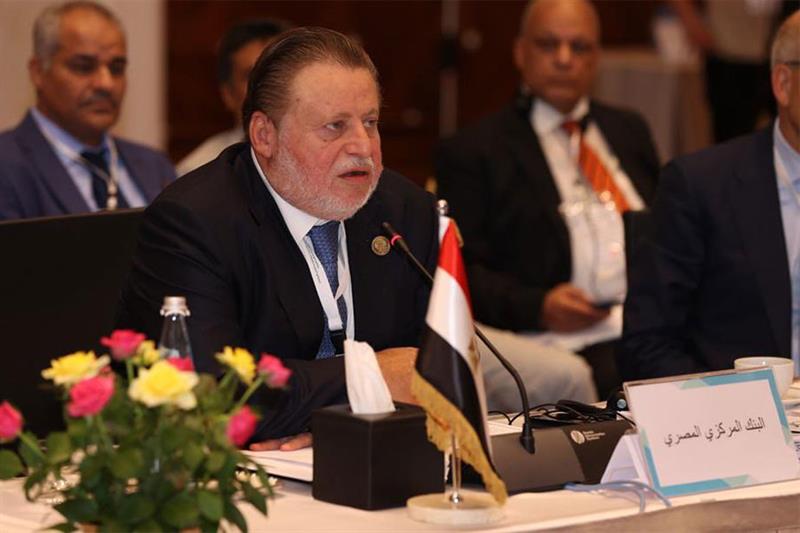
Central Bank of Egypt (CBE) Governor Hassan Abdalla has defended the country’s flexible exchange rate policy, saying currency fluctuations are a natural response to changing economic conditions and that an exchange rate remaining unchanged despite shifting market pressures should raise concerns.
Speaking during Egypt Forum 2026 on Thursday, Abdalla reaffirmed the central bank’s commitment to a flexible exchange rate regime, stressing the importance of public understanding of currency movements.
“We are committed to a flexible exchange rate, and we hope society understands that these movements are normal,” Abdalla said.
“The exchange rate moves in response to the circumstances around us,” he added, arguing that market-driven movements are a normal feature of a flexible currency system.
His remarks came as the US dollar traded at around EGP 54.5 at Egyptian banks on Thursday, approaching the EGP 55 threshold amid continued pressure on the Egyptian pound. Published exchange rates from the National Bank of Egypt showed the dollar at EGP 54.46 for buying and EGP 54.56 for selling. <Cite refs={[“turn116759search0”]}/>
Flexible Exchange Rate at the Core of IMF-Backed Reforms
Exchange rate flexibility remains a key commitment under Egypt’s $8 billion Extended Fund Facility (EFF) programme with the International Monetary Fund (IMF), which is scheduled to conclude in mid-December 2026.
The IMF has previously highlighted the risks associated with Egypt’s historical reliance on a heavily managed exchange rate, including foreign currency shortages, economic imbalances and abrupt currency devaluations that contributed to inflationary pressures and weakened investor confidence.
Under the IMF-supported programme, Egypt aims to establish a sustained transition to a flexible exchange rate system in which the pound’s value is determined by market forces and can move in either direction in response to economic developments.
The approach is intended to help the economy absorb external shocks more smoothly, support Egyptian exporters by improving their ability to compete in international markets, and encourage investment by reducing the likelihood of sudden, large-scale currency adjustments.
The IMF has also emphasised that exchange rate flexibility can help preserve the Central Bank of Egypt’s foreign currency reserves, strengthening the economy’s capacity to manage external financing pressures.
Pound Depreciation Highlights Economic Adjustment Challenges
Since the launch of Egypt’s latest phase of economic reforms in December 2022, the Egyptian pound has undergone several rounds of devaluation against the US dollar and other major currencies, losing more than half of its value against the dollar over the subsequent period, according to the figures cited in the programme documents.
The depreciation has formed part of a broader adjustment process intended to address foreign exchange imbalances and improve the functioning of the currency market.
However, exchange rate movements also have implications for businesses, consumers and investors. A weaker pound can increase the local-currency cost of imported goods, production inputs and foreign-currency obligations, while potentially improving the price competitiveness of Egyptian goods and services abroad.
The pace and direction of currency movements therefore remain important considerations for monetary policy, inflation management and business planning.
Market-Driven Pricing Remains Central to Currency Policy
Abdalla’s comments underscore the central bank’s continued emphasis on allowing market forces to play a greater role in determining the pound’s value, rather than maintaining an exchange rate that may not reflect prevailing economic conditions.
For Egypt, the effectiveness of this approach will depend on the economy’s ability to withstand external shocks, maintain foreign currency liquidity, attract sustainable investment and improve export performance.
As the IMF-supported programme approaches its scheduled conclusion, exchange rate flexibility remains a central element of Egypt’s broader economic reform agenda, with implications for price stability, investor confidence and the country’s external financing position.