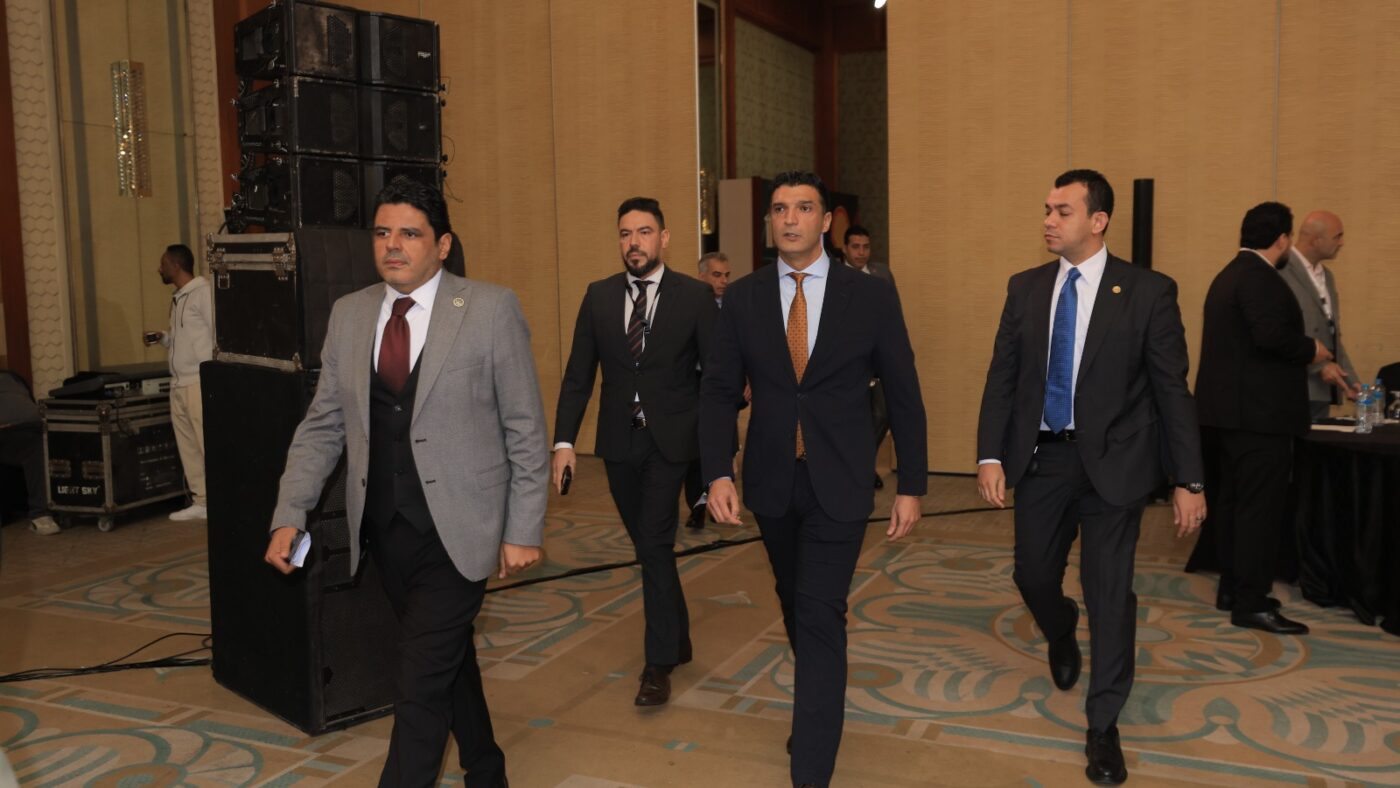
The 11th edition of the Egypt Automotive Summit kicked off today, Sunday, bringing together government representatives, senior executives from leading global and local automotive companies, manufacturers of automotive components and supporting industries, to discuss the future of Egypt’s automotive industry, plans to deepen local manufacturing, boost exports and position Egypt as a regional automotive manufacturing hub serving local, African and international markets.
Held under the theme “Egypt Vision 2030: Developing the Automotive Sector and Supporting Industries,” this year’s summit is held under the auspices of the Ministries of Industry, Investment and Foreign Trade, and Finance, with the participation of the African Association of Automotive Manufacturers (AAAM). The summit aims to strengthen industrial integration, increase local value addition and unlock new investment opportunities across the automotive sector and its related industries.
The summit’s agenda covers the government’s strategy for developing the automotive industry, incentives offered to manufacturers, the future of the National Automotive Industry Development Program (AIDP) and the Automotive Industry Financing Fund, and the vehicle replacement and renewal initiative. Discussions also cover mechanisms to support companies operating in the sector, increase vehicle and component exports, and strengthen the participation of local suppliers in global supply chains.
Mohamed Aboul Fotouh: Egypt Automotive Is a Platform for Dialogue and Practical Solutions to Advance the Industry
Mohamed Aboul Fotouh, CEO of Egypt Automotive, opened the summit by welcoming attendees and wishing Helal Owais, one of the summit’s longstanding supporters who has regularly participated in previous editions, a speedy recovery.
Aboul Fotouh emphasized that, over the years, Egypt Automotive has sought to become more than an annual conference, evolving into a gathering that brings together all stakeholders across Egypt’s automotive sector and provides a platform for dialogue, exchanging perspectives and ideas, and addressing the challenges and key issues facing the industry.
He explained that the summit’s mission extends beyond identifying challenges to developing practical ideas and proposals that can be presented to the relevant authorities, supporting informed decision-making and helping create an enabling environment for the industry’s growth and development.
He noted that the theme of the 11th edition, “Egypt Vision 2030: Developing the Automotive Sector and Supporting Industries,” reflects the sector’s current phase and the need to move beyond discussing challenges to developing practical visions and solutions that support industrial growth and strengthen competitiveness.
He added that the theme highlights the importance of aligning the state’s development objectives with the efforts of the private sector, investors and manufacturers, particularly in deepening local manufacturing, developing supporting industries, attracting investments, expanding vehicle production across different technologies, including electric vehicles, and opening new markets for Egyptian exports.
Aboul Fotouh also announced the selection of H.E. Eng. Khaled Hashem, Minister of Industry, as Chairman of the 11th Egypt Automotive Summit, following consultations with a broad cross-section of automotive industry stakeholders. The selection continues the summit’s established approach of reflecting the industry’s appreciation for the figures chosen to chair its annual editions.
He thanked the Minister for accepting, describing his chairmanship as a valuable addition to the summit and an opportunity to strengthen communication and dialogue between the automotive community and government institutions responsible for developing the industry.
Industry Minister: Egypt Aims to Build an Integrated Industrial Base and Localize Automotive Component Manufacturing
Eng. Khaled Hashem, Minister of Industry and Chairman of the 11th Egypt Automotive Summit, affirmed that the Egyptian government places great importance on developing the automotive sector, given its potential to attract investment, create jobs, and support the growth of supporting industries.
The Minister expressed his appreciation to the summit’s organizers, noting that over the years it has evolved into an important platform for dialogue and exchanging perspectives among the various stakeholders in Egypt’s automotive industry, as well as an opportunity to discuss challenges and opportunities and agree on practical steps to support industrial growth and expand production capabilities.
He explained that the automotive sector is among the industries targeted for development under the Ministry of Industry’s updated strategy, which seeks to strengthen Egypt’s integration into global supply chains and move the country’s automotive industry toward a more advanced stage by building an integrated industrial base.
This approach goes beyond final vehicle assembly to include local component and parts manufacturing and the development of a network of local suppliers capable of meeting manufacturers’ requirements in line with the highest international standards of quality and competitiveness.
Hashem highlighted the National Automotive Industry Development Program (AIDP) as a key instrument supporting this direction by incentivizing industrial investments, deepening local content, increasing production volumes, encouraging global manufacturers to expand their manufacturing operations in Egypt, and boosting export-oriented production.
He added that the Ministry, in coordination with relevant authorities and through ongoing consultation with industry stakeholders, is working to develop the program’s implementation mechanisms to address the needs of investors and manufacturers better and create a more competitive and attractive investment environment.
The Minister stressed that developing the automotive industry is closely linked to the growth of supporting industries, which represent a fundamental pillar for deepening local manufacturing and enhancing competitiveness. In this regard, the Ministry is working to strengthen integration between vehicle manufacturers and local component producers, develop supplier capabilities, support technology transfer, and improve quality and productivity standards.
He also highlighted the importance of keeping pace with the global transition towards electric vehicles and localizing related industries, creating new opportunities for investment and industrial partnerships. He noted that the recent period has witnessed the signing of several partnerships and agreements with major international companies in vehicle manufacturing, automotive components and supporting industries.
Hashem affirmed that Egypt possesses strong industrial capabilities that qualify it to play a central role as a regional hub for automotive manufacturing, components production and exports. These capabilities include the country’s existing industrial infrastructure and the potential of companies operating across vehicle manufacturing, components and supporting industries.
He added that achieving these objectives requires a genuine, sustained partnership between the government and the private sector, based on clear priorities, the exchange of ideas, and effective coordination to address challenges and turn available opportunities into productive industrial projects.
The Minister called on participants to use the summit as a platform for practical discussions and proposals that can help develop policies and support programs for the sector, generate serious investment projects, strengthen integration between vehicle manufacturers and supporting industries, and translate industrial localization efforts into tangible implementation steps.
Khaled Seif: Recent Challenges Are Strengthening Local Manufacturing and Opening New Markets for the Automotive Industry
Khaled Seif, General Manager of Shell Lubricants Egypt, emphasized that the Egypt Automotive Summit is an important platform for strengthening dialogue among stakeholders in Egypt’s automotive industry. He also commended the organizers’ continued commitment to developing the summit year after year.
Seif noted that the automotive sector is one of the vital pillars of the Egyptian economy, pointing to positive economic developments that call for stronger cooperation among companies operating in the industry and greater utilization of available opportunities.
He added that discussions about the future of the automotive industry cannot be separated from the significant market developments witnessed over recent months. While these developments have created pressures and challenges for the sector, they have also strengthened opportunities for local manufacturing and opened new markets for Egyptian products.
He stressed the importance of turning current challenges into growth opportunities by strengthening manufacturing and building relationships among companies and manufacturers, thereby supporting the industry’s future in Egypt.
Seif also reaffirmed Shell’s pride in its position in the global automotive lubricants market and its longstanding strategic relationships with major customers and automotive manufacturers in Egypt. He noted that many of these relationships have been built over decades of cooperation and mutual trust.
He explained that Shell contributes to the development of Egypt’s automotive sector, drawing on more than 100 years of experience in the Egyptian market, and expressed his hope for continued dialogue and engagement among participants throughout the summit.
Dr. Tarek Massaad: Egypt Has a Significant Opportunity to Build an Integrated Automotive Industry and Expand African Exports
Dr. Tarek Massaad, President of the African Association of Automotive Manufacturers (AAAM), affirmed that the Egypt Automotive Summit has become an established platform for dialogue on the future of the automotive industry and supporting industries in Egypt, the region and across Africa. He stressed the importance of continued cooperation among governments, manufacturers and investors to support the sector’s growth.
Massaad thanked Mohamed Aboul Fotouh and the summit’s organizing team, as well as automotive manufacturers and participants, the Minister of Industry and government representatives, commending their efforts to support the industry and strengthen investment and local manufacturing opportunities.
He explained that the automotive industry is no longer simply a limited domestic issue, but has become an important development and trade priority linked to increasing exports and strengthening economies’ ability to generate genuine added value.
He noted that Egypt Vision 2030 aims to develop the automotive industry and align production with market requirements. This goal requires consistent policies and long-term investments to establish a strong industrial base.
Massaad added that Egypt’s opportunity extends beyond increasing vehicle production. It lies in building an integrated industrial ecosystem that generates added value, strengthens competitiveness, and enables manufacturers and suppliers to participate more effectively in production value chains.
He pointed out that the sector has entered a new phase, where the primary challenge is executing and translating visions and strategies into practical steps by building a more integrated market connecting Egypt with other African countries.
The AAAM President stressed that industrial integration is fundamental to the automotive industry’s success across Africa. He explained that Egypt’s success in developing the sector would positively impact the wider African automotive industry, contributing to job creation and opening broader opportunities for investment and regional cooperation.
He noted that Egypt has significant opportunities and competitive advantages that qualify it to play a central role in the African automotive industry, particularly given its clear industrial development strategy and government support. The priority, he emphasized, is to capitalize on these strengths and translate them into productive projects and genuine partnerships.
Massaad further stressed that achieving the industry’s objectives requires facilitating trade flows for suppliers, strengthening industrial linkages, encouraging investment and enhancing cooperation among all stakeholders. He explained that the automotive industry depends not only on capital but also on long-term financing, a qualified workforce and effective partnerships with governments and companies.
He concluded by affirming that Africa’s ambition to build a strong automotive industry is achievable, but requires consistent implementation, a clear strategy, more manufacturing facilities, and sustained investment in technology and development. He emphasized that the time has come to move from visions to practical implementation and build partnerships that support the future of the automotive industry across Africa.
Ankush Arora: Global Shifts Are Reshaping the Automotive Landscape, with China and India Driving Market and Export Growth
Ankush Arora, CEO of Mansour Automotive Group, delivered a presentation highlighting major transformations in the global automotive industry, their implications for the Egyptian market, and opportunities for the sector in the coming period.
Arora emphasized that the Egypt Automotive Summit is an important gathering that brings together the automotive industry’s stakeholders as one community to discuss market and business developments, address challenges and opportunities, and explore the industry’s future direction.
He noted that the sector had successfully navigated several major global and regional crises over the past five years, including the COVID-19 pandemic, the Russia-Ukraine war, recent geopolitical tensions, currency crises, supply chain disruptions and the semiconductor shortage.
He stressed that the automotive industry had not only managed to overcome these challenges but had also achieved growth and progress despite the difficult circumstances.
Arora explained that understanding the future of Egypt’s automotive industry requires closely monitoring global market developments and assessing how these trends affect local businesses and the domestic market.
His presentation focused on three main areas: global automotive industry trends, their implications for the Egyptian market, and opportunities to drive further growth.
He reviewed indicators from the world’s five largest automotive markets: the United States, Europe, Japan, China and India, highlighting a clear shift in the global industry’s centers of gravity over the past five years.
The US automotive market reached approximately 16.4 million units, while the European new-car market recorded around 10.8 million units. Japan’s new-car market stood at approximately 3.8 million units.
In contrast, China recorded substantial growth, with its new-vehicle market reaching approximately 30 million units and exports totaling 8.3 million vehicles, representing a 312% increase over the past five years.
He also highlighted India’s accelerating growth, with its automotive market reaching approximately 4.5 million units. The automotive industry contributes around 7.1% of India’s GDP, while exports have risen to about 1.1 million units, up from around 100,000 units five years ago.
Arora emphasized that these indicators reflect a fundamental shift in the global automotive landscape. While Chinese exports have grown exceptionally, some traditional automotive markets have seen exports decline.
He noted that these developments require emerging markets such as Egypt to carefully assess global transformations and capitalize on the opportunities they create to shape future industrial expansion and export strategies.
He concluded by stressing the importance of linking global developments to local market needs, enabling companies in the sector to identify future opportunities and develop strategies aligned with the rapid transformations across the automotive industry.
Rohan Fernandes: Deepening Local Manufacturing and Developing Suppliers Are Key to Building a Competitive Automotive Industry
Rohan Fernandes, Chairman and Managing Director of General Motors Egypt and Africa, affirmed that the shared objective across the industry is to build a more competitive automotive sector that is deeply integrated into the Egyptian economy and capable of serving as a genuine growth engine, not only for Egypt but also for Africa and beyond.
Fernandes explained that the success of the automotive industry should not be measured solely by market size or the number of vehicles sold, marketed or serviced. Instead, it should be assessed primarily by the economic and industrial value the sector contributes to Egypt’s industrial base and wider economy.
He noted that achieving this objective requires an integrated set of capabilities, including a world-class business hub, a competitive industrial base and a qualified workforce capable of meeting industry challenges, alongside clear political commitment and strategic support.
He stressed the importance of translating these capabilities into a fully integrated automotive manufacturing ecosystem that positions Egypt as a leading industrial hub serving Egyptian, African and European markets.
Fernandes presented several indicators of Egypt’s automotive market performance, noting that 2026 is expected to be a record year for industry stakeholders, with demand increasing by approximately 70,000 units and further growth anticipated in the remaining two months of the year.
He said these indicators reflect a notable improvement in market performance. However, the more important question is how this growth translates into local manufacturing. He highlighted an increase of approximately 13,000 additional vehicles sold and produced locally.
At the same time, he highlighted a gap that needs attention: the declining share of locally manufactured vehicles in the overall market, despite rising local production volumes.
He emphasized that addressing this gap requires coordinated efforts from all stakeholders, alongside continued government efforts to improve policies and regulatory procedures in ways that strengthen the competitiveness of locally manufactured vehicles.
Fernandes affirmed that General Motors, which has been operating in the Egyptian market for more than four decades, considers local manufacturing central to its business model. He noted that the company manufactures approximately 95% of the vehicles it sells in Egypt locally.
He added that the future of Egypt’s automotive industry will not be determined solely by market growth rates, but by its ability to deepen local manufacturing, develop industrial capabilities and adopt advanced technologies.
He stressed that the industry’s true economic value lies in upgrading local suppliers’ capabilities and placing greater emphasis on advanced component manufacturing, automotive software, vehicle structures, electrical and electronic systems, battery systems and precision engineering. These, he explained, represent the fundamental pillars of the future of automotive manufacturing and mobility.
Fernandes said Egypt’s ambition should extend beyond vehicle assembly to become an integrated industrial center for developing engineering and technological capabilities in the automotive sector, enabling it to compete globally and export to international markets.
He noted that achieving this vision requires action across three strategic pillars, starting with genuine industrial localization. This should not be limited to meeting formal requirements or achieving nominal local-content percentages, but must instead focus on building real technological capabilities, improving productivity and achieving economies of scale through expanded production.
Fernandes revealed that General Motors directs approximately US$150 million in annual investments to support and develop local supply chains in Egypt, underscoring the importance of sustained investment in local suppliers and industrial capabilities.
He concluded by emphasizing that the next phase requires shifting the industry’s focus from market growth alone towards maximizing local added value and building a more integrated industrial ecosystem capable of competing internationally and expanding exports.
The 11th Egypt Automotive Summit will continue its sessions and activities, bringing together government representatives, industry experts, and senior executives from global and local companies to strengthen dialogue among stakeholders and develop practical recommendations that support the advancement of the automotive industry and supporting industries, while accelerating industrial localization, investment, and export growth in Egypt.