
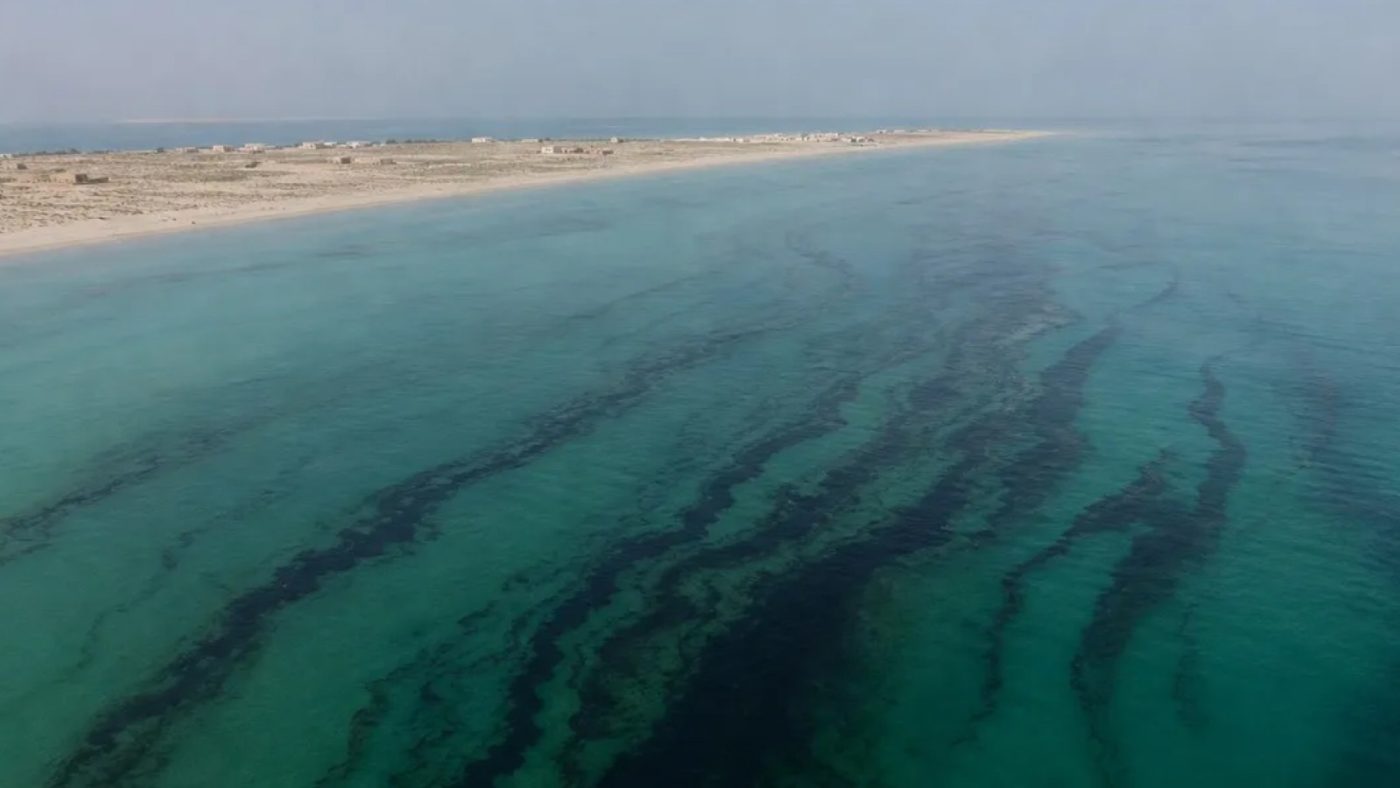
Greenpeace Middle East and North Africa (MENA) has warned of growing environmental threats resulting from escalating attacks across the Gulf, revealing that satellite monitoring has identified more than 609 possible oil slicks across the Gulf, the Strait of Hormuz and the Arabian Sea since February 2026.
The organization reported that approximately 148 vessels have reportedly been attacked across the Gulf region, while the cumulative daily mapped footprints of the identified oil slicks have covered approximately 21,000 square kilometers.
These findings highlight the growing pollution risks facing the region’s fragile marine ecosystems, including coral reefs, mangroves and seagrass meadows.
Oil Pollution Threatens Marine Life and Coastal Economies
Greenpeace MENA warned that the environmental consequences of the escalating conflict extend beyond the immediate locations of attacks. Oil contamination, fires and hazardous releases could threaten air and water quality, fisheries and coastal economic activities.
The organization also raised concerns over potential contamination of soil, water resources and the food chain, with possible implications for food safety and human health. Such environmental impacts could extend further inland, raising concerns about the safety of natural resources across the region.
Greenpeace stressed that environmental destruction should not be treated as an acceptable consequence of conflict, noting that the effects of war can persist long after hostilities end. It also cautioned against assuming that ecosystems and affected communities will automatically recover once the fighting stops.
Greenpeace Calls for Urgent Regional Action to Contain Pollution
Ghiwa Nakat, Executive Director of Greenpeace MENA, said: “The greatest danger is that this becomes the new normal. Each new spill risks hitting ecosystems that have not recovered from the last. Communities across the Gulf should not have to pay the price of this conflict with their health, livelihoods and environment. We cannot allow environmental destruction to become an accepted consequence of war. Protecting people and the ecosystems they depend on must be an urgent priority.”
Greenpeace MENA called for an immediate de-escalation of hostilities and an end to attacks that endanger people and the environment.
The organization also urged coordinated regional action to independently assess environmental damage, contain pollution, protect affected communities and ecosystems, and prevent further environmental harm.