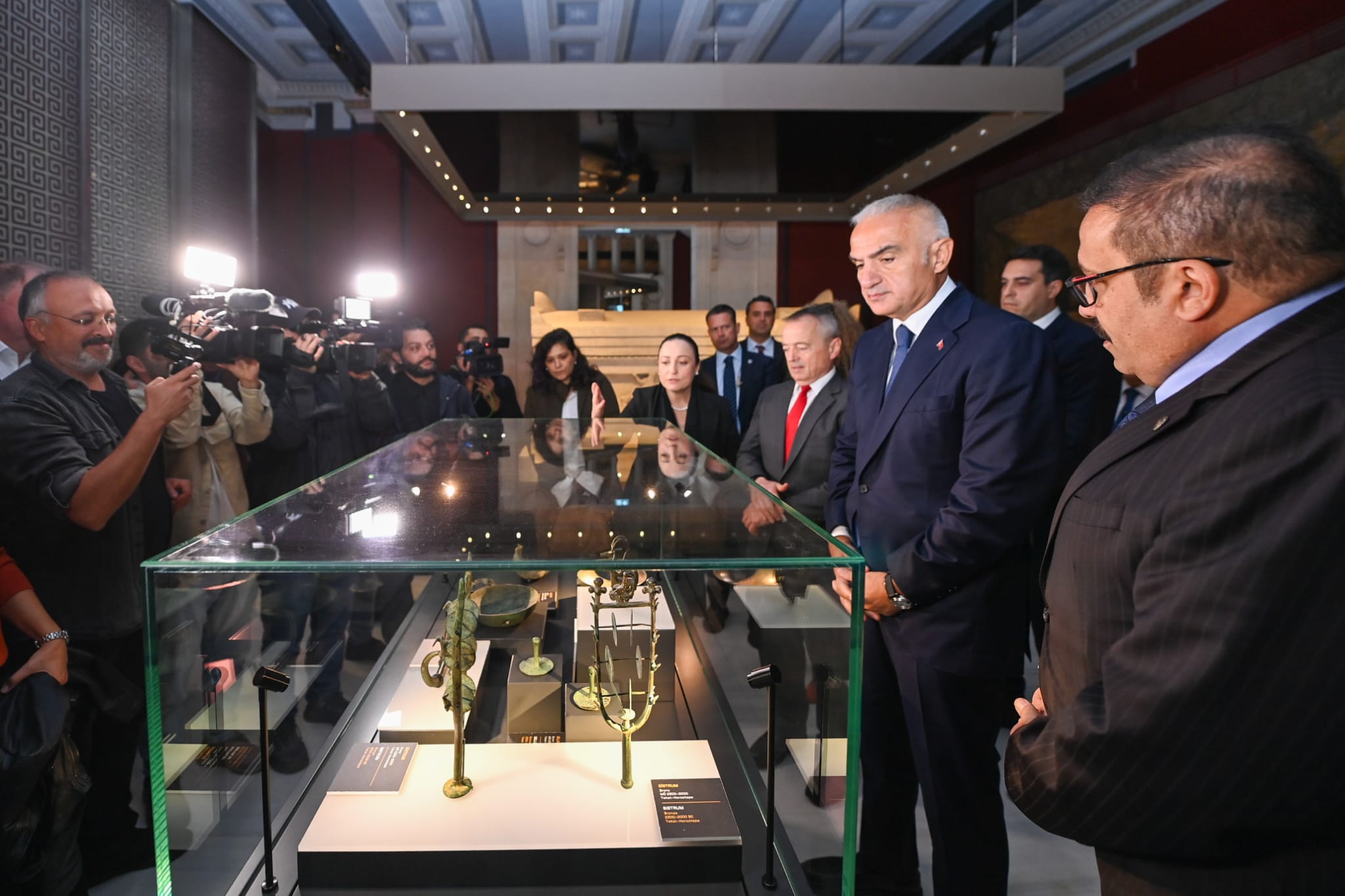
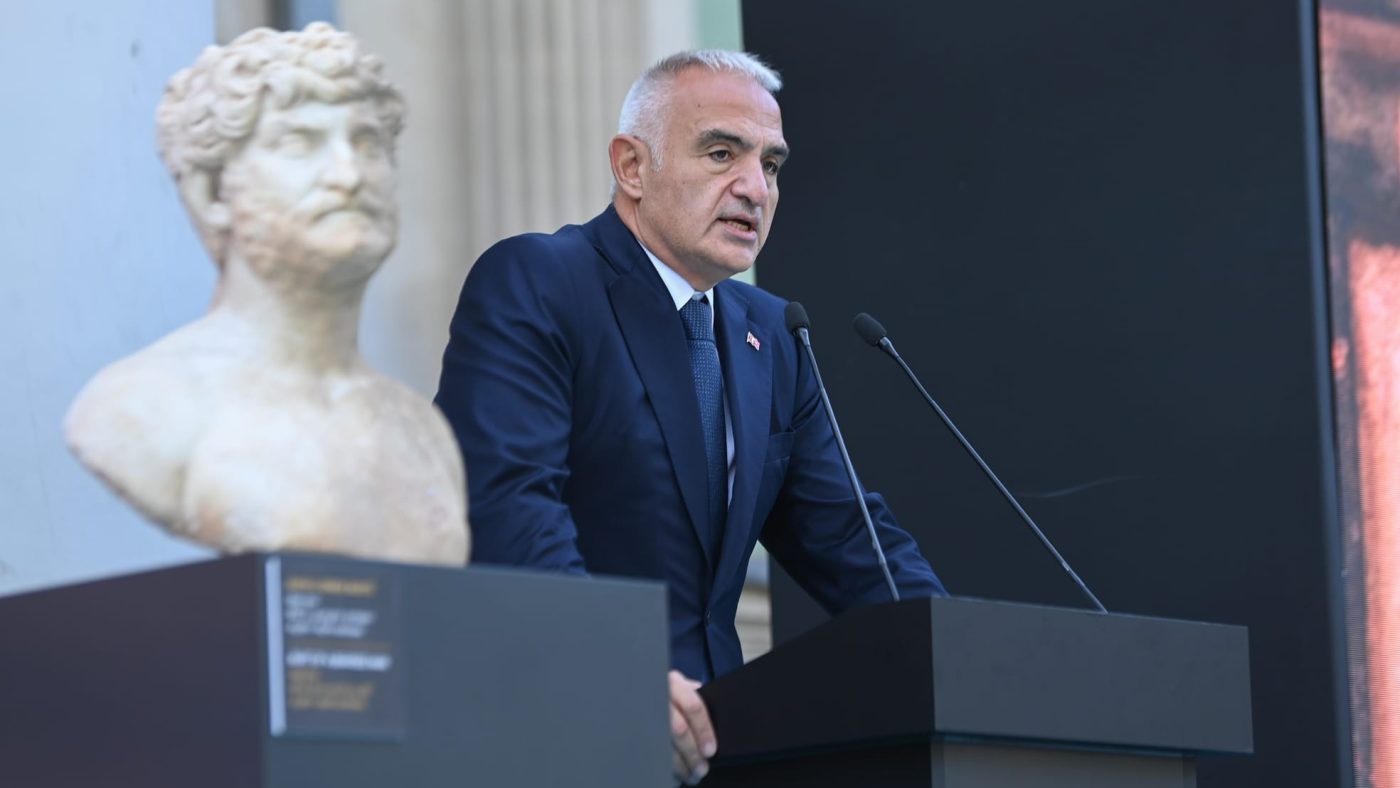
Türkiye continues to make significant progress in protecting its rich cultural heritage and repatriating artefacts unlawfully taken abroad. At a press conference at the İstanbul Archaeology Museums, Minister of Culture and Tourism Mehmet Nuri Ersoy introduced 100 cultural artefacts recently returned to Türkiye from the United States and officially opened the exhibition “No Way Out: Boubon.”
As a direct result of the international legal and scientific diplomacy spearheaded by the Ministry of Culture and Tourism, Türkiye has lately secured the return of numerous treasures that showcase Anatolia’s deep-rooted history to its home soil. Notably, when a United States-based auction house put Anatolian-origin artefacts up for sale in May 2026, the Ministry acted immediately. By sharing scientific data and documentation with the Manhattan District Attorney’s Office and Homeland Security Investigations (HSI), the Ministry halted the sale, ensuring the artefacts’ return to Türkiye.
Speaking at the presentation of the returned treasures, Minister Ersoy highlighted the vital support of the Manhattan District Attorney’s Office and HSI, the Ministry of Foreign Affairs, and Türkiye’s Consulate General in New York during the repatriation process, while thanking Turkish Airlines for safely transporting the artefacts back to Türkiye.
At the event, attended by Manhattan Deputy District Attorney and Head of Trafficking Unit Matthew Bogdanos, Minister Ersoy said: “Our goal is not merely to move artefacts from one display case to another, but to re-evaluate them within their stories and the cultural context to which they belong,” stating Türkiye will steadfastly continue its fight against the trafficking of cultural property.
Ranging from ancient musical instruments to architectural reliefs, the 100 repatriated artefacts reinforce Türkiye’s unwavering commitment to sustainably preserving its cultural heritage on the global stage. In parallel, the newly opened exhibition “No Way Out: Boubon” brings together artefacts from the ancient city of Boubon in Burdur, southern Türkiye, that were looted and dispersed across various countries and collections.
Highlights of the 100 Anatolian Masterpieces
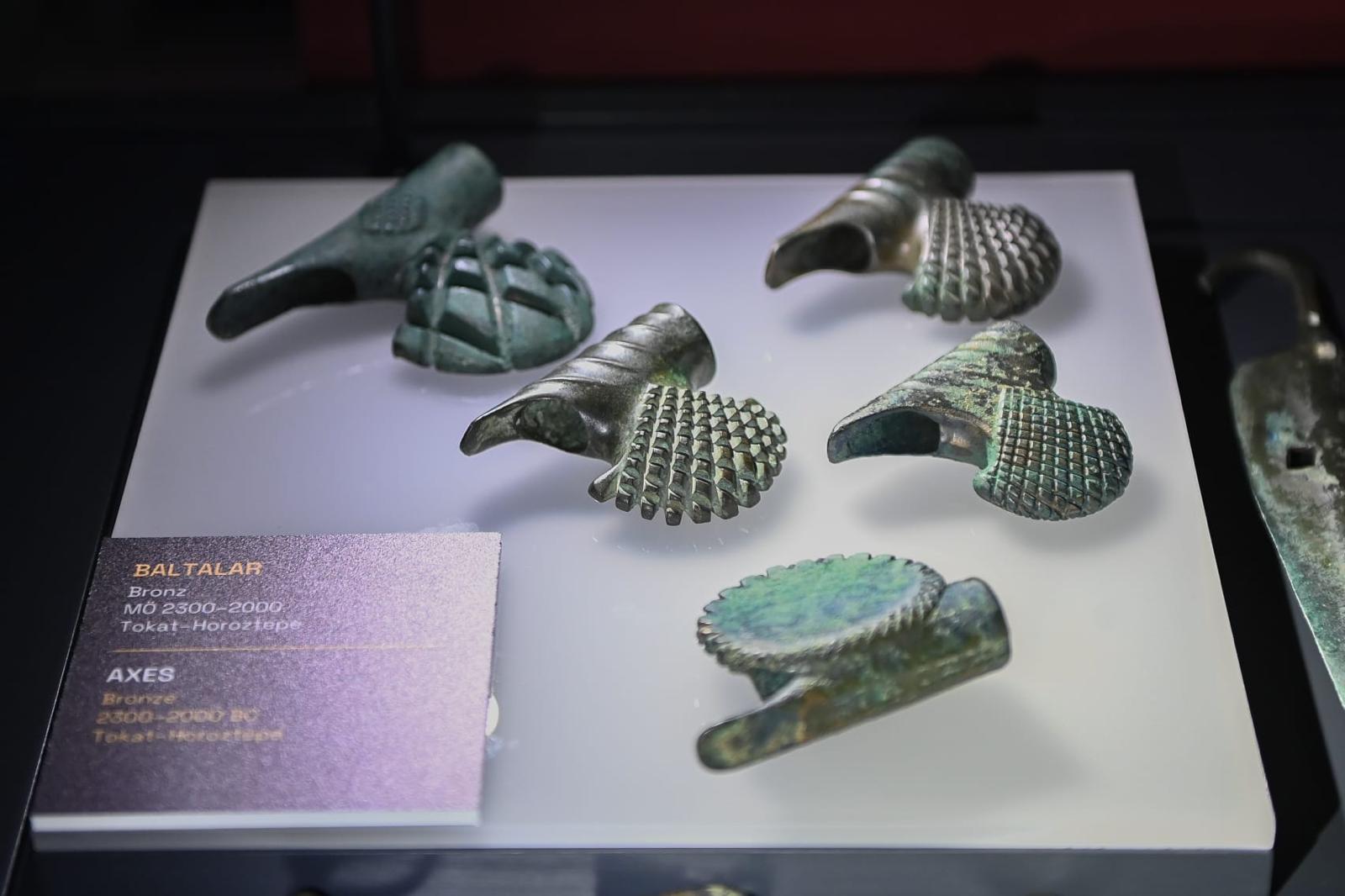
Among the repatriated cultural artefacts, a prominent group comprises 40 pieces originating from Horoztepe in the Erbaa district of Tokat, situated in Türkiye’s Central Black Sea region. Dated between 2300 and 2000 BCE, this collection of ceremonial musical instruments, weaponry, and metal vessels reflects Early Bronze Age Anatolia’s sophisticated metalwork. The repatriation of these artefacts—achieved nearly 70 years after the items were looted—was driven by a combined evaluation of multidisciplinary scientific and historical findings.
The second major assemblage returned to Türkiye consists of 44 terracotta architectural plaques from the village of Düver in Burdur. Used in the roofing and cladding systems of ancient structures, these plaques—dating back to the Archaic Period (6th century BCE)—underwent rigorous comparative analysis of their ornamental, structural, and stylistic traits, followed by meticulous tracking through archival and collection records. After earlier repatriations from the USA in 2022, Denmark in 2024, and the Virginia Museum of Fine Arts in 2025, the recovery of the remaining group from the J. Paul Getty Museum in Los Angeles has completed the reunification of this significant set. As part of an upcoming project, the Düver artefacts will be reunited with other pieces housed in the collections of the İstanbul Archaeology Museums.
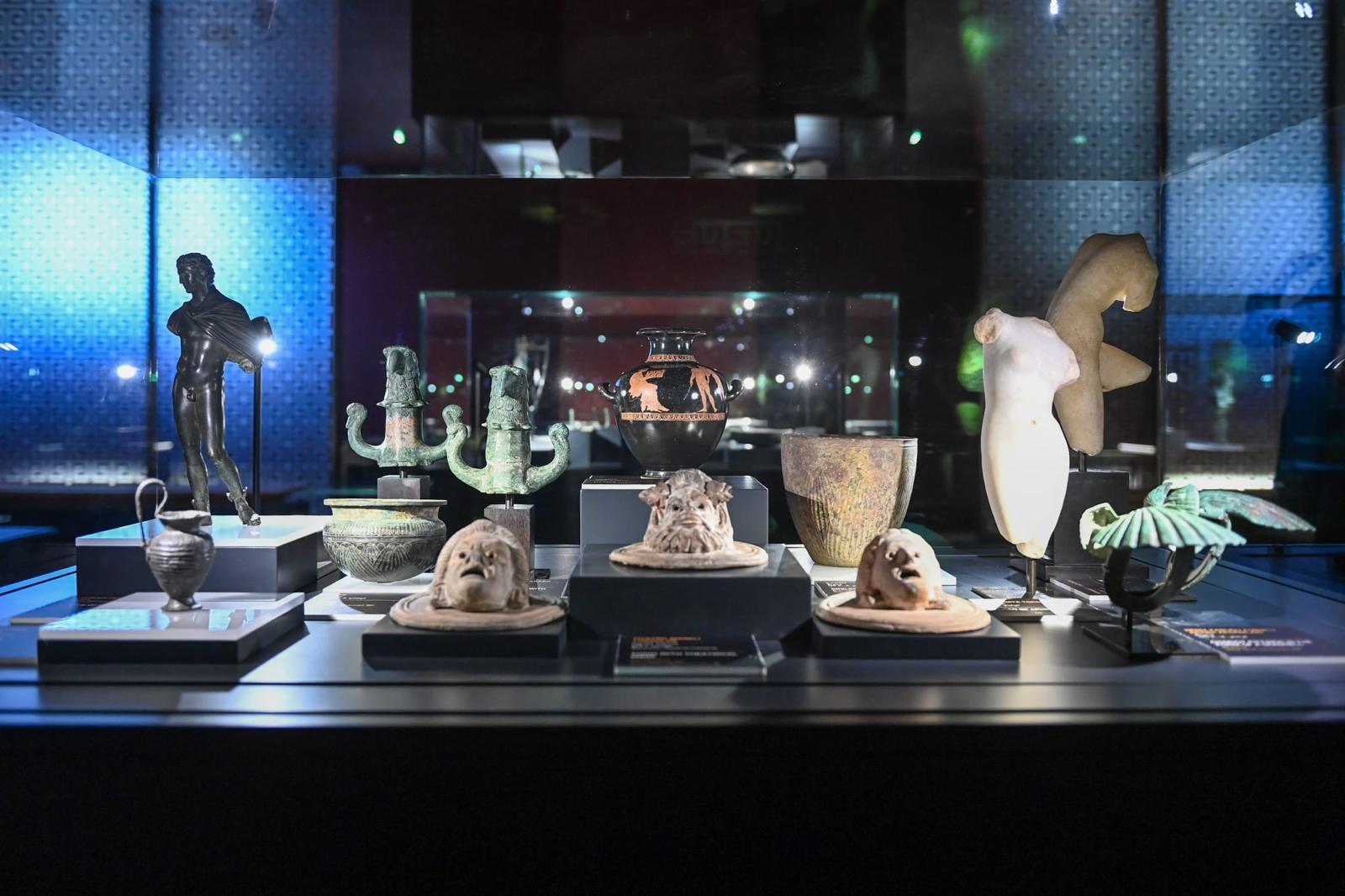
The returned items also include significant individual masterpieces, notably a portrait from the ancient city of Aphrodisias in Aydın, southwestern Türkiye, alongside theatre masks and statuettes of goddesses.
Boubon’s Fragmented Statues Reunited After Decades
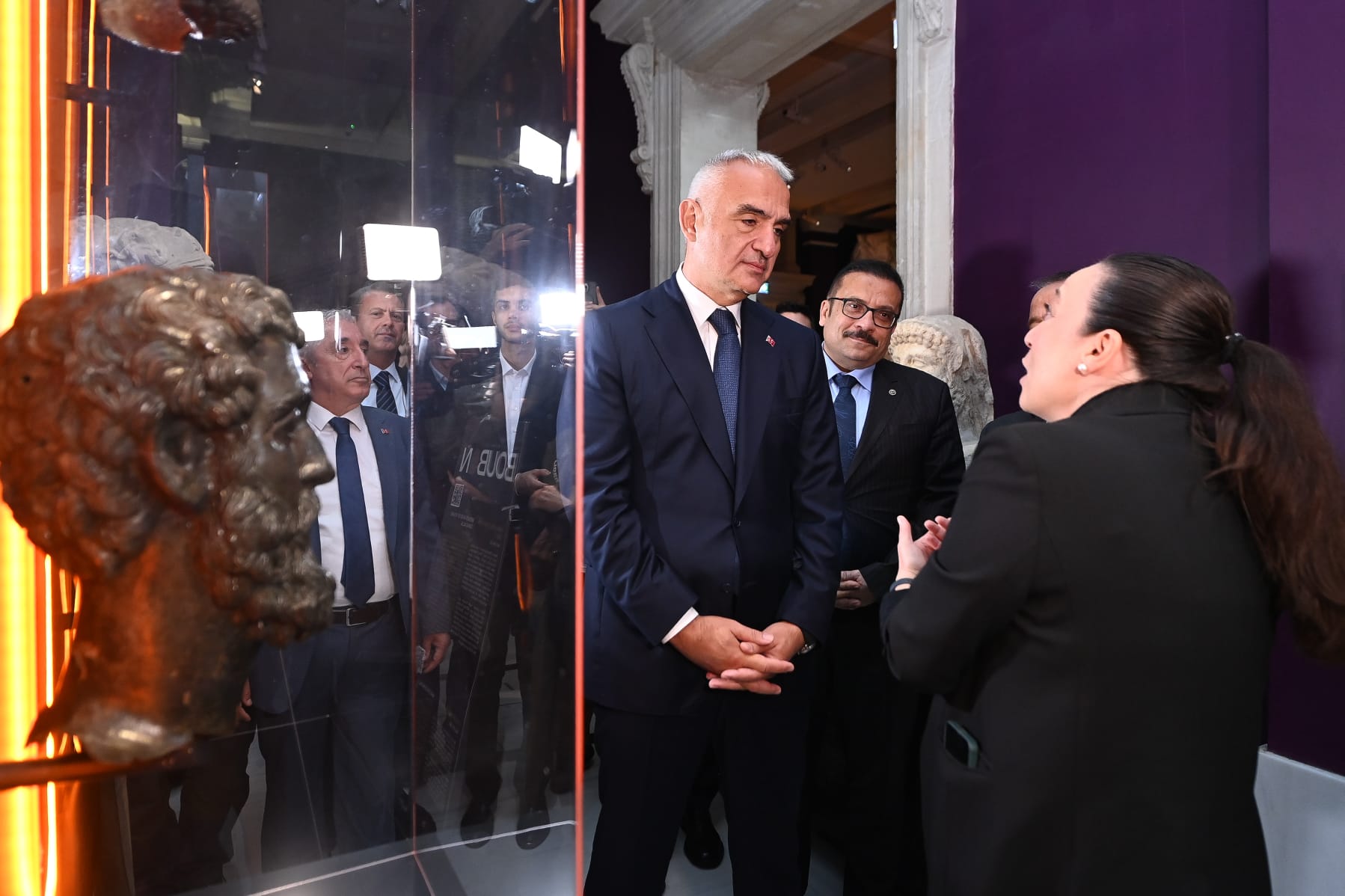
Building upon these key recoveries, the “No Way Out: Boubon” exhibition highlights the culmination of a multi-decade battle against cultural property trafficking. The display showcases magnificent bronze statues looted from the ancient city of Boubon, located near İbecik Village in the Gölhisar district of Burdur.
Originally discovered in the Sebasteion—a shrine dedicated to Roman emperors and the imperial family—the statues were fragmented and illicitly smuggled abroad during illegal excavations in the 1960s. Through meticulous investigations, experts compared the joining traces between the statues’ feet and their stone pedestals, a connection further corroborated by soil and lead isotope analyses.
Consequently, with their heads, torsos, and limbs previously scattered across various international collections and countries, these magnificent bronzes are now reunited within the exhibition. The returned Boubon artefacts notably include statues depicting Emperors Lucius Verus, Septimius Severus, Caracalla, and Marcus Aurelius.
The return of these artefacts has provided new impetus for scientific research. Accordingly, Turkish archaeologists are currently carrying out the archaeological excavations that restarted at Boubon in 2023, under the coordination of the Burdur Archaeology Museum.