
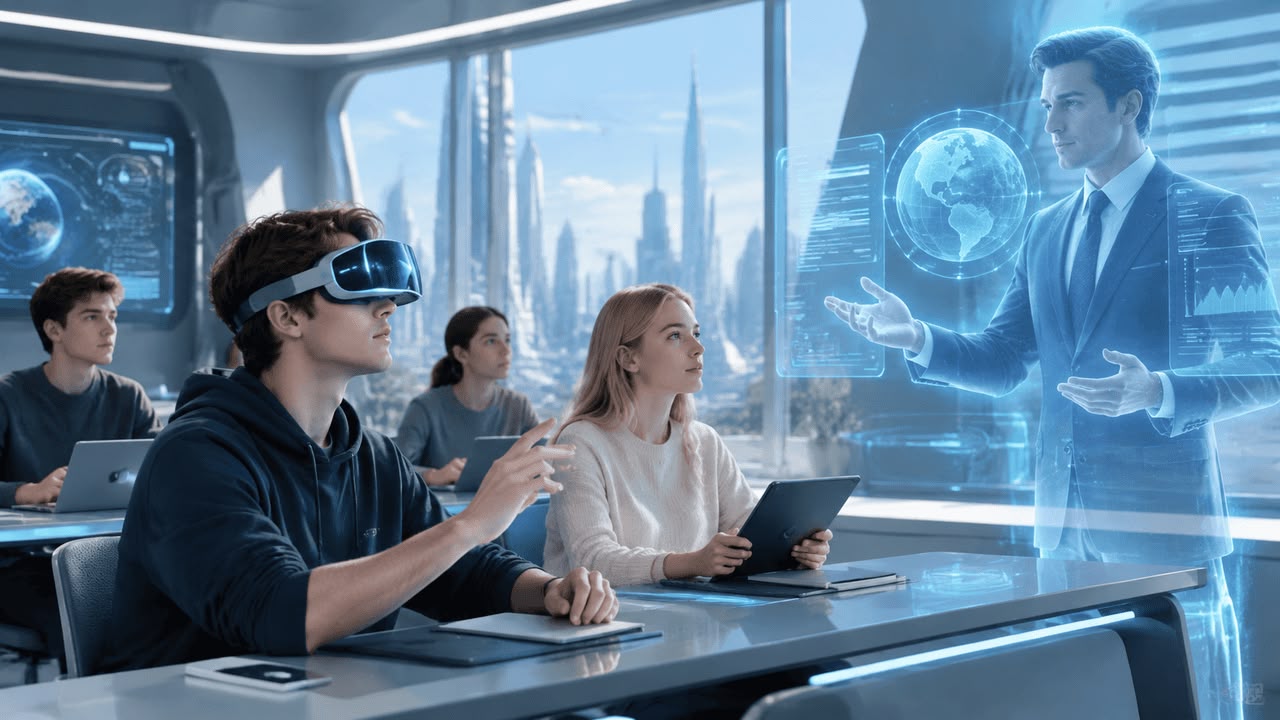
As the world prepares to mark World Teachers’ Day, new research from Kaspersky highlights Gen Z’s growing awareness of emerging technologies that could reshape education, particularly artificial intelligence (AI). The findings show that Gen Z is more familiar with technologies such as virtual AI teachers and AI-enabled virtual reality classrooms than the other generations surveyed.
For a generation that has grown up surrounded by digital platforms, online learning tools and AI-powered services, technology has become an integral part of the educational experience. The rapid adoption of digital education technologies in recent years has also influenced how Gen Z expects classrooms to evolve in the future.
According to Kaspersky’s internal Market Research Center, 18% of Gen Z respondents identified AI teachers as one of the most promising technologies for the future, the highest share among all generations surveyed, compared with 16% of respondents overall.
The findings also point to strong interest in immersive learning. Some 14% of Gen Z respondents consider classrooms equipped with virtual or augmented reality and supported by AI assistants to be a promising future trend, compared with 12% across the overall respondent base.
Technology is becoming more central to education
Gen Z’s interest in AI-powered learning comes as technology continues to play a larger role in education. More than two-thirds of Gen Z respondents, or 68%, said they had witnessed greater use of technology in their educational experience over the past five years. This compares with 55% of respondents from the other generations surveyed.
The growing presence of digital tools is laying the groundwork for the next stage of educational transformation, in which AI could provide more personalized support and create more interactive learning experiences.
Virtual AI teachers can help students explore complex subjects at their own pace, provide tailored explanations and support the development of skills based on individual needs. At the same time, immersive technologies such as virtual and augmented reality can make learning more interactive and engaging.
However, the integration of AI into education also raises important considerations around how these technologies should be used. Guidance from the Organisation for Economic Co-operation and Development (OECD) on digital education, alongside UNESCO’s guidance on generative AI in education and research, highlights the importance of human oversight, ethical use, data protection and continuous development of human skills as technology evolves.
AI literacy becomes essential
As AI becomes increasingly present in classrooms, the challenge is no longer limited to whether students use these technologies, but also whether they have the skills to use them effectively and responsibly.
AI literacy is therefore becoming an important component of modern education, helping both students and teachers understand what AI systems can do, as well as their limitations.
Kaspersky recommends that users keep three principles in mind when using AI:
Verify information: AI-generated responses may contain inaccurate or outdated information or lack the necessary context. Students should therefore treat AI-generated content as a starting point and verify important information through reliable sources.
Maintain the human role: AI can support learning through explanations and feedback, but critical thinking, independent analysis and guidance from teachers remain essential.
Protect personal data: Students should consider what information they share with AI platforms, understand how their data may be used and apply available privacy settings where appropriate.
Broader cybersecurity awareness is equally important. Kaspersky’s Cyber Safety course helps users understand common digital risks and develop practical habits for protecting their accounts, devices and personal information.
To support teachers and parents as AI takes on a growing role in education, Kaspersky has also launched an online training series focused on the responsible use of AI in education. The company has additionally published its “Digital Schoolbag” guide, which provides parents and children with recommendations for using AI safely and responsibly.
The importance of these skills is expected to grow as AI tools become increasingly integrated into education, work and everyday communication.
Evgeniya Ruskikh, Head of Academic Affairs at Kaspersky, said that Gen Z has grown up in an environment where digital technologies have become a natural part of everyday learning.
“Gen Z’s expectations suggest that the next stage of education will focus on creating more personalized and interactive learning experiences with the support of AI,” Ruskikh said. “However, this transformation may create significant educational and knowledge-related challenges, as excessive reliance on algorithms could undermine students’ critical thinking and their ability to solve problems independently.”
She added that successful AI adoption requires more than technology itself, noting that students and teachers need to develop skills to verify information, understand the limitations of AI systems and use these tools responsibly.