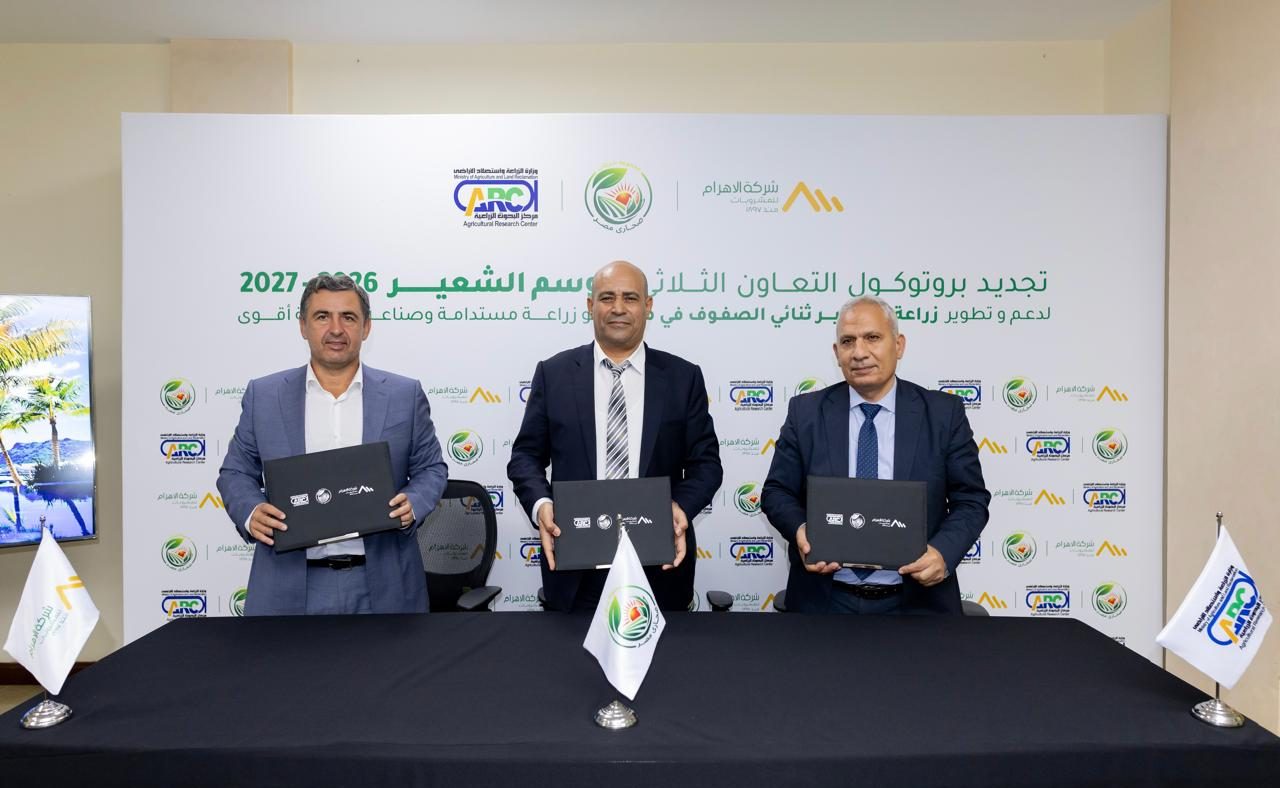
Al Ahram Beverages Company (ABC) has renewed its trilateral partnership for the 2026/2027 barley season with the Agricultural Research Center (ARC), affiliated with the Ministry of Agriculture and Land Reclamation, and its strategic partner Sahara Egypt, introducing a new environmental and social impact pillar aimed at supporting sustainable agriculture and empowering rural communities.
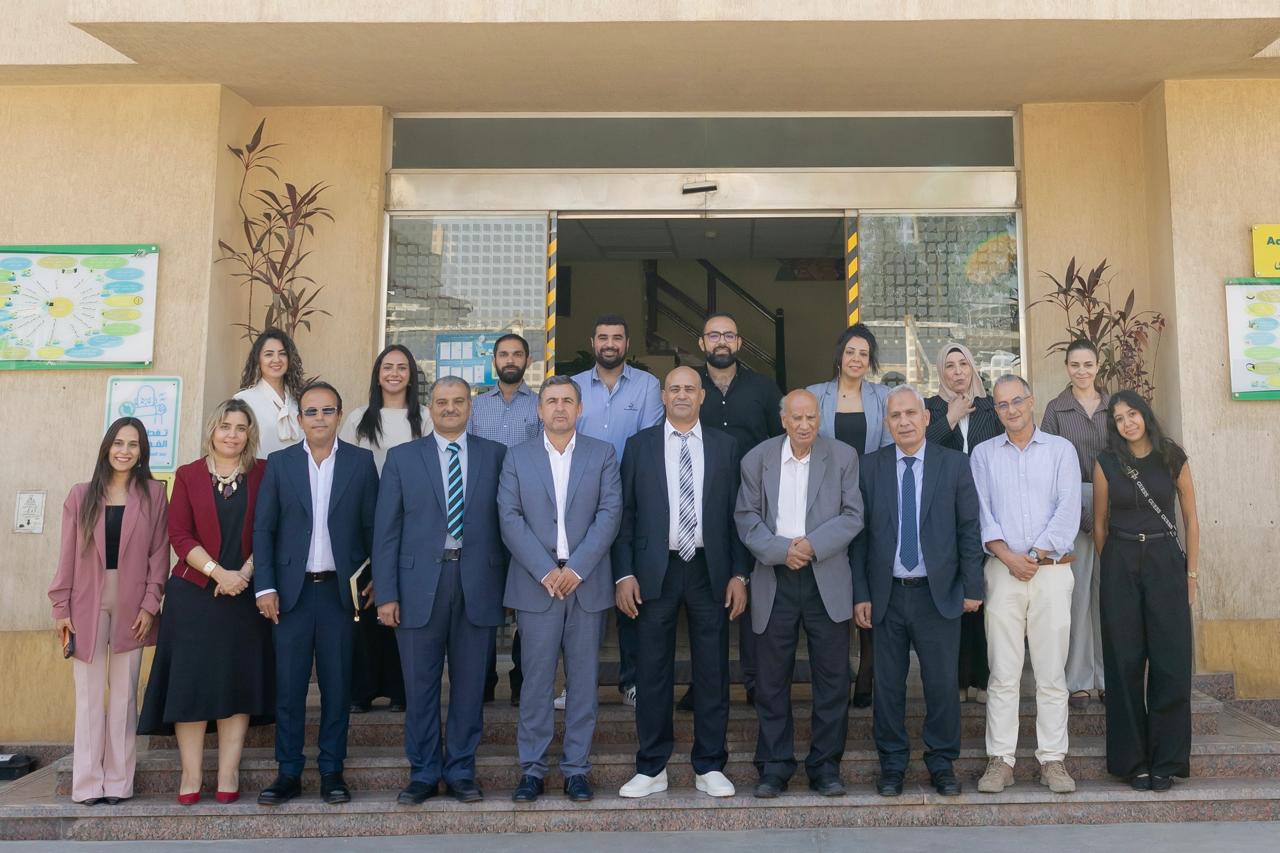
The renewal ceremony took place at ABC’s malt plant in 6th of October City, with the agreement signed by Nikolay Mladenov, Managing Director of Al Ahram Beverages Company; Eng. Mohamed Abdallah, Chairman of Sahara Egypt; and Dr. Maher El-Maghraby, Vice President of the Agricultural Research Center.
The partnership aims to advance local barley cultivation, strengthen supply chain sustainability, and enhance the resilience of Egypt’s agricultural economy. It also supports ABC’s local sourcing strategy, under which the company relies on 100% locally grown barley and sources more than 90% of its total raw materials from the Egyptian market, reducing dependence on imports.
Water Savings Reach 530,000 Cubic Meters During 2025/2026 Season
The renewed partnership builds on the tangible achievements of the 2025/2026 season, during which the joint program advanced climate-smart agricultural practices and improved resource efficiency, generating estimated annual water savings of approximately 530,000 cubic meters.
The program also supported the development of high-quality barley varieties and increased reliance on local production, contributing to efforts to reduce carbon emissions, lower import dependence, and establish a more sustainable agricultural system capable of addressing future challenges.
New Programs Target 200 Farmers Across Three Governorates
As part of the renewed protocol, the partners introduced a new environmental and social impact pillar to expand the partnership beyond agricultural development and environmental sustainability, delivering direct economic and social benefits to farmers and rural communities.
The initiative will directly support 200 farmers through two complementary programs.
The first program will provide 6.5 tons of certified, high-yield barley seeds to 100 farmers in Fayoum and Kafr El Sheikh, supporting expected grain production of approximately 200 tons. It will also enable the production of up to 10 tons of green fodder per farmer and is expected to increase household incomes by between 25% and 35%.
The second program will target another 100 farmers in Fayoum, Kafr El Sheikh, and New Valley through knowledge-sharing and capacity-building initiatives. These efforts aim to increase technical knowledge by 30%, promote sustainable farming practices, and reduce post-harvest losses by 15%.
ABC: Partnership Builds an Integrated Local Agricultural Value Chain
Nikolay Mladenov, Managing Director of Al Ahram Beverages Company, said the renewal represents another milestone in a partnership that began more than 40 years ago with the Agricultural Research Center and has evolved into an integrated model combining scientific research, agricultural implementation, and industrial manufacturing.
He explained that the collaboration has helped establish a local value chain starting with Egyptian-grown barley and ending with high-quality products capable of competing in regional and international markets.
Mladenov added that the company’s reliance on 100% locally grown barley and sourcing more than 90% of its raw materials locally reflect its long-term commitment to supporting Egyptian agriculture, strengthening local manufacturing, and generating sustainable economic value.
He also noted that the company’s malt plant transforms locally grown barley into high-quality malt to meet domestic market demand and support self-sufficiency, while approximately 40% of its production is exported to regional markets.
Commenting on the new social impact pillar, Mladenov said the initiative reinforces the company’s sustainable development approach by empowering smallholder farmers with the knowledge, expertise, and resources needed to improve their livelihoods and contribute to the growth of rural communities.
He added that the new phase of cooperation supports more inclusive economic growth and sustainable agricultural development in line with Egypt Vision 2030.
Agricultural Research Center Highlights Role of Scientific Research
Dr. Maher El-Maghraby, Vice President of the Agricultural Research Center, said the renewed protocol reflects the success of the longstanding cooperation between the three partners and the tangible results achieved over previous seasons.
He described the partnership as a model of integration between scientific research, agricultural application, and industrial manufacturing, contributing to the development of barley cultivation in Egypt through modern scientific methods and sustainable agricultural practices.
El-Maghraby added that the collaboration supports the agricultural sector, improves the efficient use of natural resources, protects the environment, and contributes to improving farmers’ livelihoods and supporting rural communities.
Sahara Egypt: New Social Pillar Expands Partnership Impact
Eng. Mohamed Abdallah, Chairman of Sahara Egypt, said renewing the cooperation protocol for the second consecutive year reflects the success of the partnership between industry, agriculture, and scientific research.
He explained that the results achieved during the 2025/2026 season across the agricultural and environmental pillars provided the foundation for introducing a third pillar focused on social impact and improving the livelihoods of vulnerable families working in the agricultural sector.
Abdallah also highlighted the importance of continued cooperation in expanding local barley cultivation in Egypt, noting its role in strengthening the agricultural sector’s contribution to the national economy and reducing reliance on imports.
Through the renewed partnership, ABC aims to further develop an integrated model connecting manufacturing efficiency, scientific research, environmental sustainability, and community empowerment, while strengthening the long-term competitiveness of Egypt’s agricultural and industrial sectors.
The company’s malt plant in 6th of October City was established in 2005 as the first and only facility of its kind in the Middle East and North Africa. It holds several international certifications covering quality, food safety, environmental management, and occupational health and safety, including ISO 9001, ISO 14001, ISO 45001, and FSSC 22000, and is listed on the National Food Safety Authority’s whitelist.
The plant supplies the local market and exports approximately 40% of its production to regional markets. It also supports circular economy practices by recycling malt by-products, including barley rootlets and broken grains, for use in animal feed production.