President Rahmon urges investors to channel capital into production, technology and tourism
Tajikistan is moving towards a more open and investment-friendly economy, with a growing focus on strengthening the private sector, attracting quality investments and expanding opportunities in production, technology and tourism.
President Emomali Rahmon said the country is seeking to create a more conducive environment for entrepreneurship and investment, urging domestic and foreign investors to direct capital towards productive industries, modern technologies and tourism projects that generate jobs, increase exports and improve living standards.
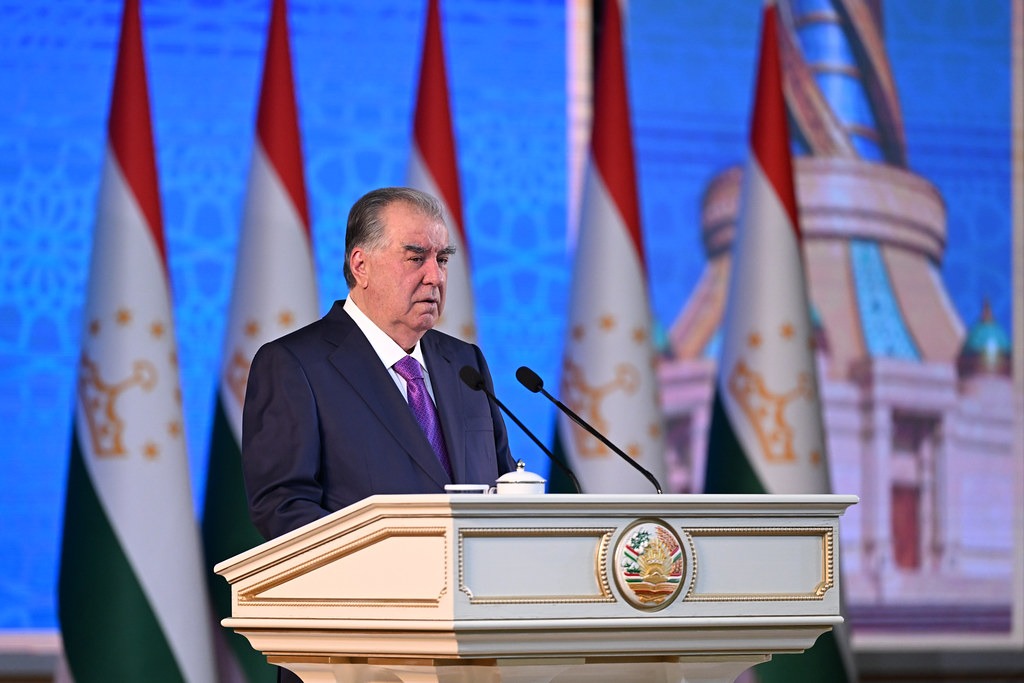
The President made the remarks during a meeting with investors and entrepreneurs at the Unity Palace in Dushanbe, held on the occasion of Entrepreneurs’ Day in Tajikistan. The meeting reviewed the development of the private sector, economic and investment reforms, and priorities for the next stage.
Tourism and mountainous regions
President Rahmon placed particular emphasis on tourism and regional development, calling on investors not to limit their activities to major cities but to explore the significant economic and tourism potential of remote and mountainous areas.
He instructed the government to establish mechanisms to support productive projects in these regions and called for greater investment in tourism infrastructure, particularly hotels, resorts and service facilities.
The President’s call reflects Tajikistan’s efforts to increase tourism’s contribution to the national economy by leveraging its mountainous landscapes and rich cultural and heritage assets.
He stressed that the next phase of entrepreneurship should be driven by knowledge, modern technology and higher productivity, with greater emphasis on developing competitive products for domestic and international markets.
Investment reforms
Rahmon noted that Tajikistan adopted a new law on investment and the promotion of investment activity in 2025, alongside a strategy for attracting investment through 2040.
He called for the full and consistent implementation of these measures, stressing that new investment should increasingly support new production capacity, technological modernisation, productive employment and export growth.
The President also called for the revival of underutilised production facilities, saying the success of investment projects should be assessed not only by the number of enterprises established, but also by their production capacity, technological standards, permanent jobs and competitiveness.
Digital transformation
Digitalisation is also emerging as a key pillar of Tajikistan’s economic agenda.
President Rahmon instructed the government and relevant authorities to prepare, within three months, a comprehensive plan for developing digital entrepreneurship, with implementation scheduled to begin in 2027.
He urged businesses to digitalise accounting, sales, production management and quality control, while making greater use of artificial intelligence for data analysis and decision-making.
The government was also instructed to complete the digitalisation of key services related to company registration and the issuance of licences and permits by the end of 2027.
Women and youth
The President highlighted the importance of increasing the participation of women and young people in entrepreneurship and economic activity.
He said the number of women entrepreneurs in Tajikistan has reached around 110,000, representing 28 percent of all economic entities. During the first nine months of 2026, women entrepreneurs received loans totalling 7.2 billion somoni, up 29 percent from the same period last year.
Rahmon stressed that expanding opportunities for women and young people is essential to making better use of the country’s human capital.
Private sector gains strength
The President said Tajikistan’s transition to a market economy has been based on private ownership, freedom of business activity and fair competition.
Government reforms have strengthened the private sector, which now accounts for around 70 percent of GDP and total employment, while private-sector businesses generate more than 80 percent of state tax revenues.
The number of entrepreneurial entities has reached approximately 395,000, an increase of around 20,000 compared with the same period last year.
Economy maintains strong growth
Reviewing economic performance, Rahmon said Tajikistan’s GDP reached approximately 177 billion somoni in 2025, with real growth of 8.4 percent.
During the first nine months of 2026, the economy expanded by 8.3 percent. The President attributed the performance to peace and stability, government economic policies, and the efforts of the population and private sector.
He stressed, however, that economic growth should be measured not only through headline figures but also by its impact on living standards, competitive production and the creation of highly productive jobs.
A new investment direction
President Rahmon’s address signals a broader shift in Tajikistan’s economic priorities, from simply increasing the number of projects to improving the quality and impact of investment.
The focus is increasingly on technology transfer, productivity, exports, employment and value creation, supported by legislative reforms, investment incentives and digital transformation.
The President called for stronger cooperation between the government and the private sector and for the attraction of strategic investments capable of opening new markets, transferring technology and enhancing the competitiveness of the national economy.
He expressed confidence that Tajik entrepreneurs and investors would continue to contribute to major development projects, launch new initiatives, strengthen transparency and support the country’s transition towards a stronger and more sustainable economy .